
Last updated November 22, 2026
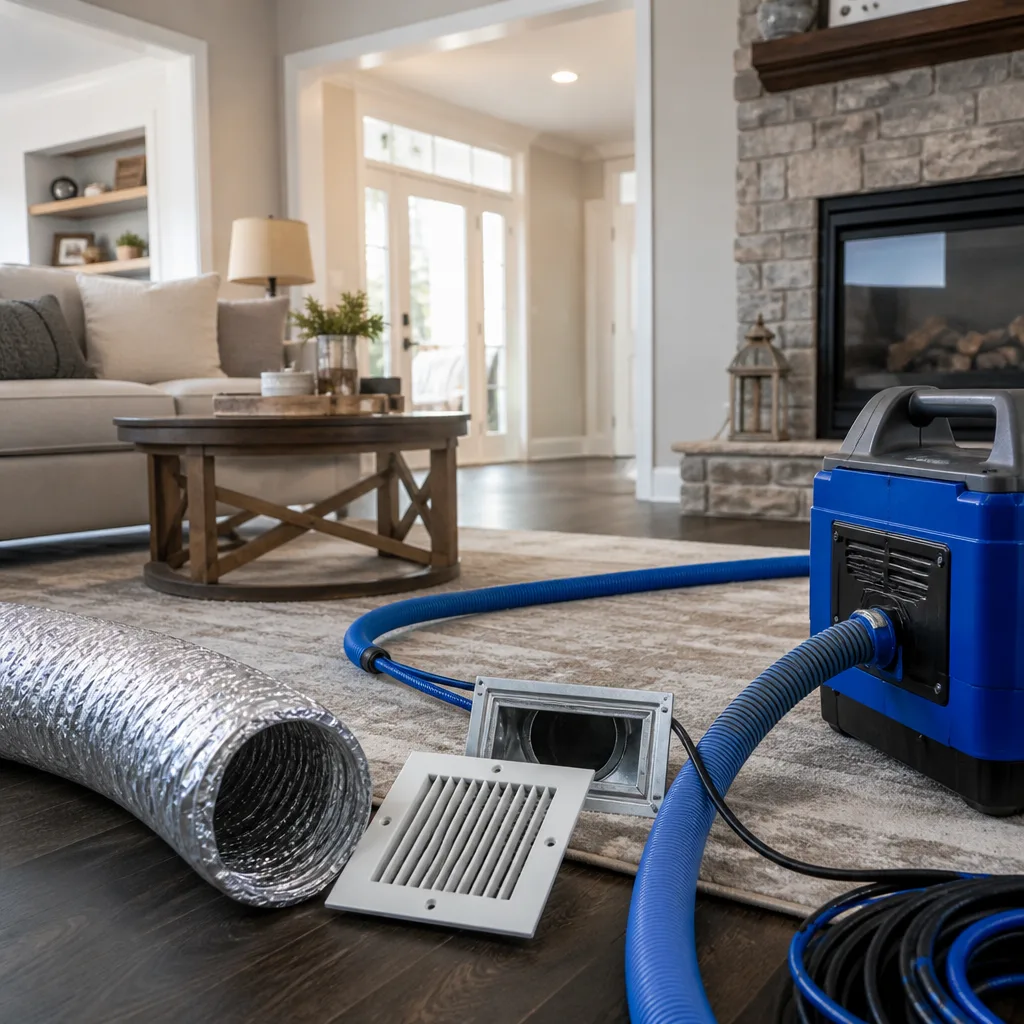 Whole-home duct cleaning
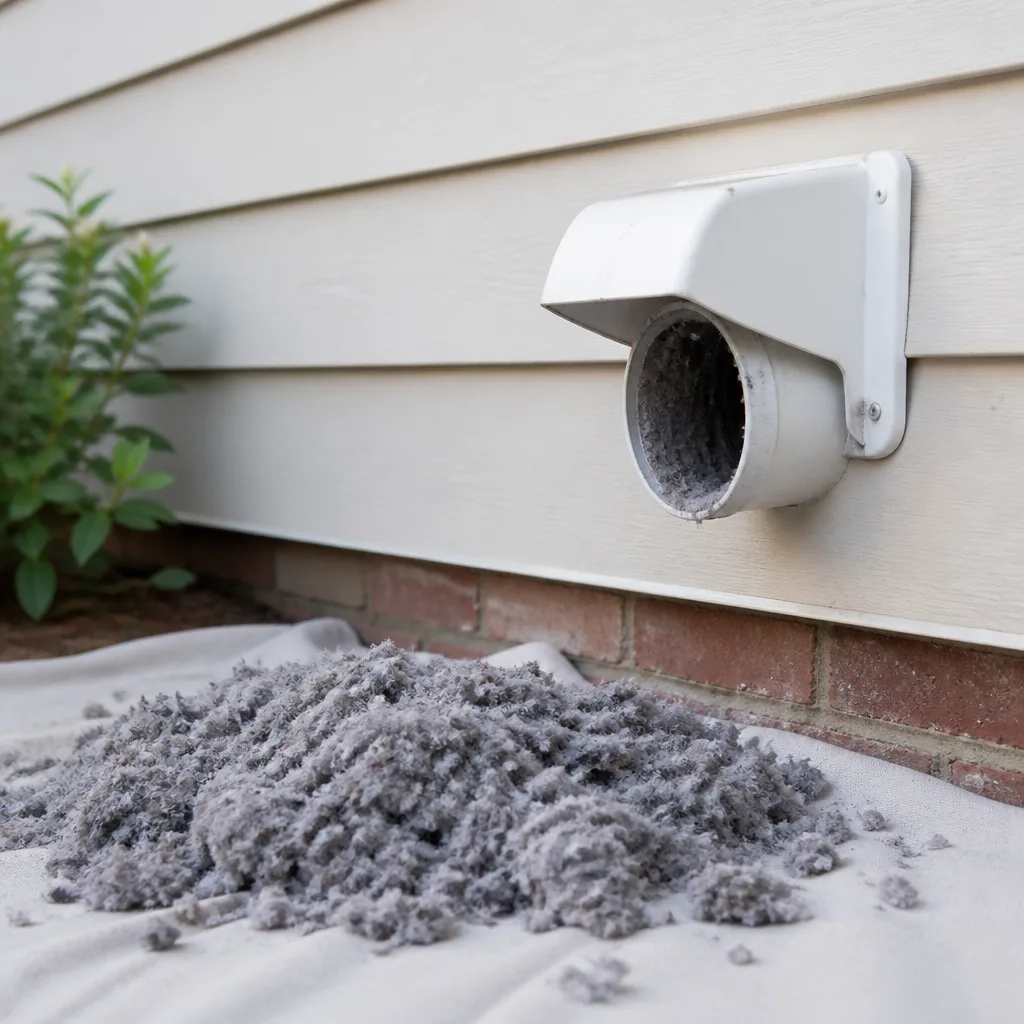 Dryer vent cleaning
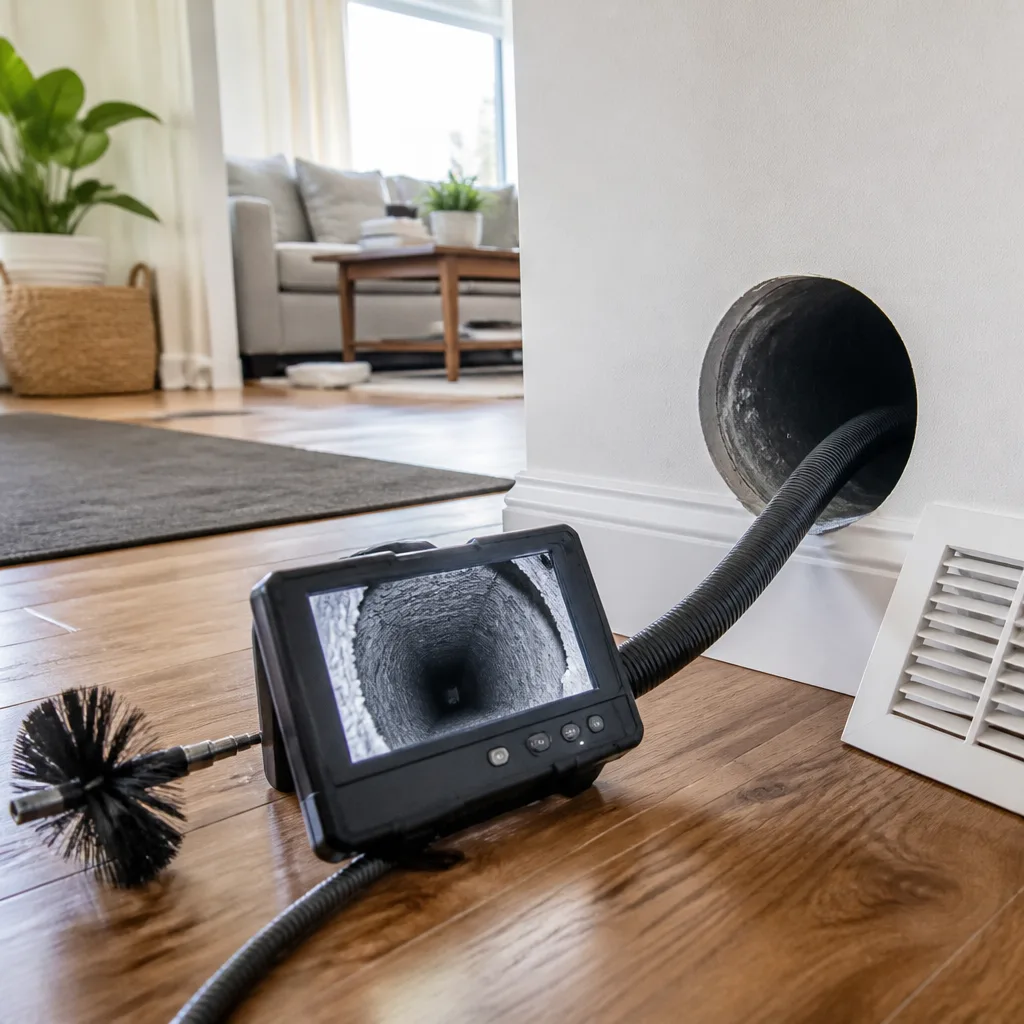 Camera inspection
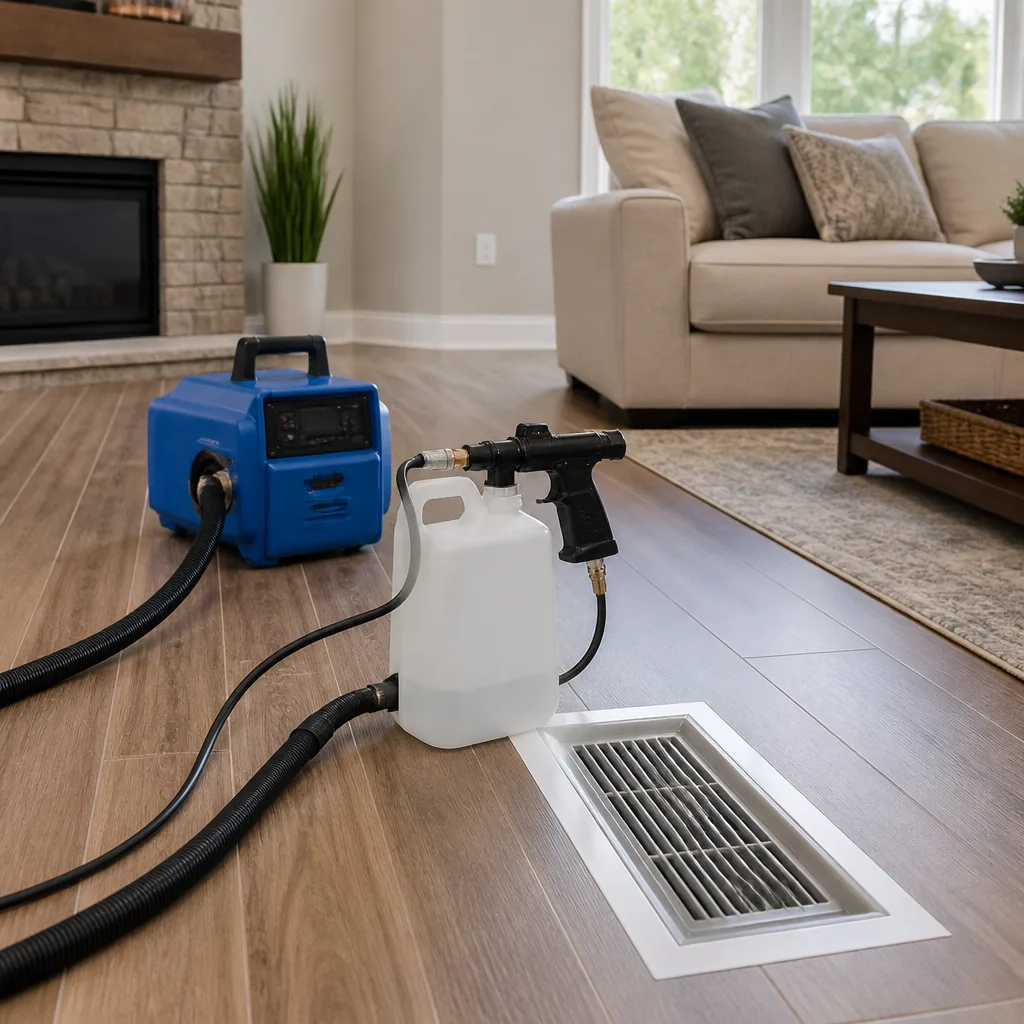 Sanitizing & deodorizing
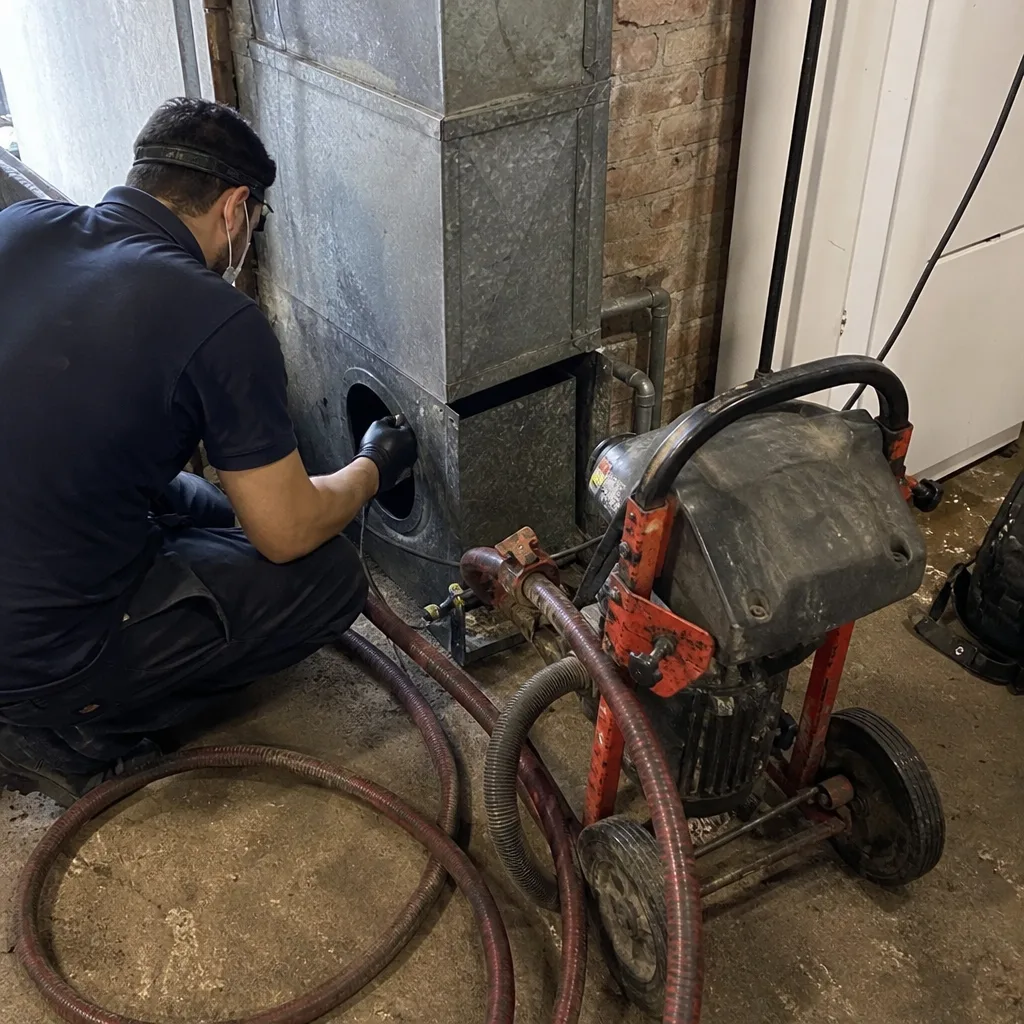
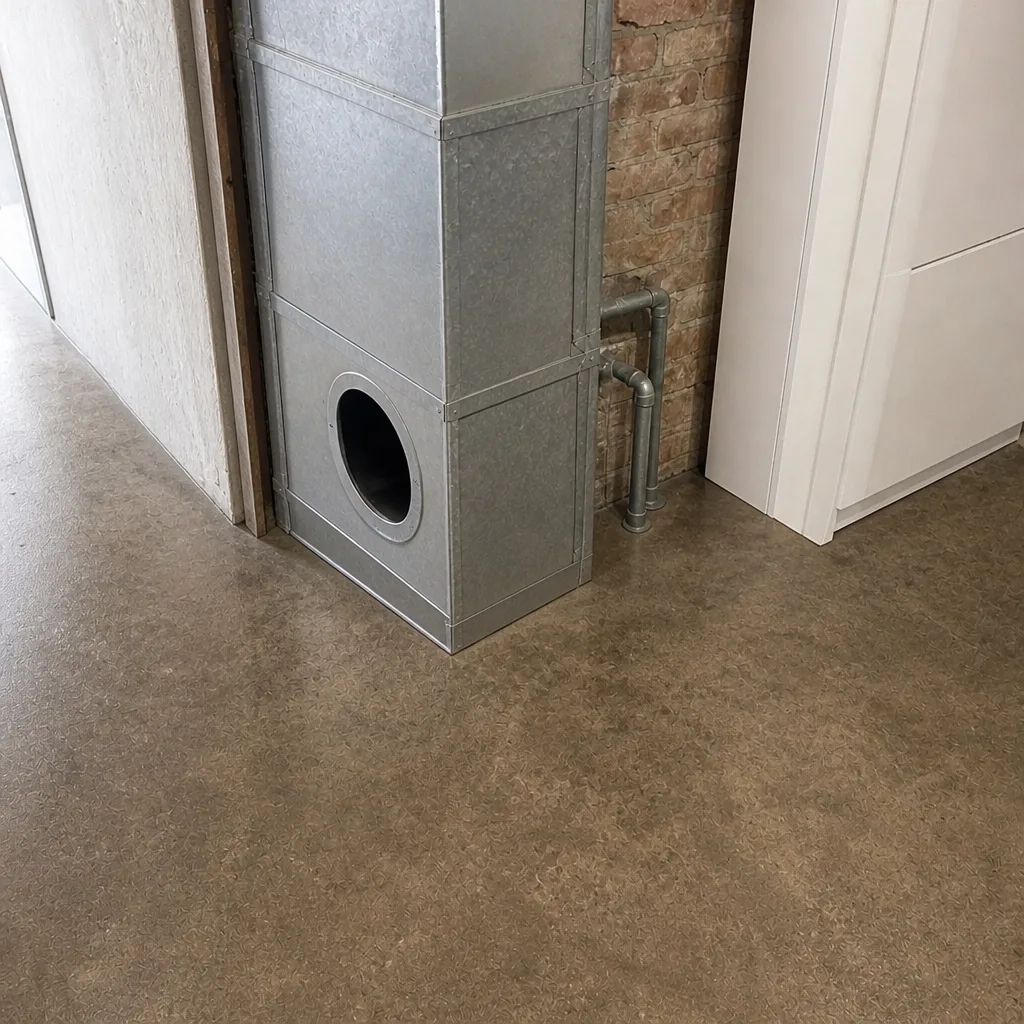
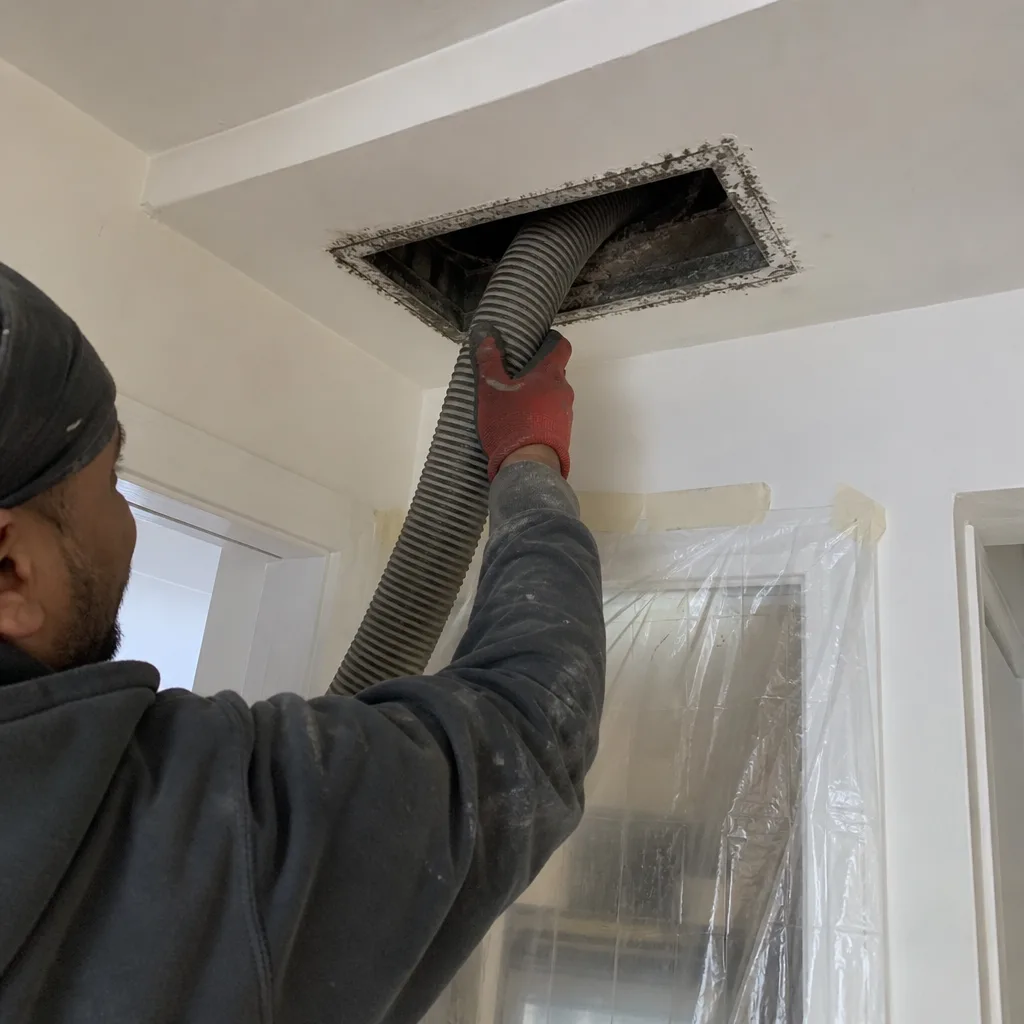
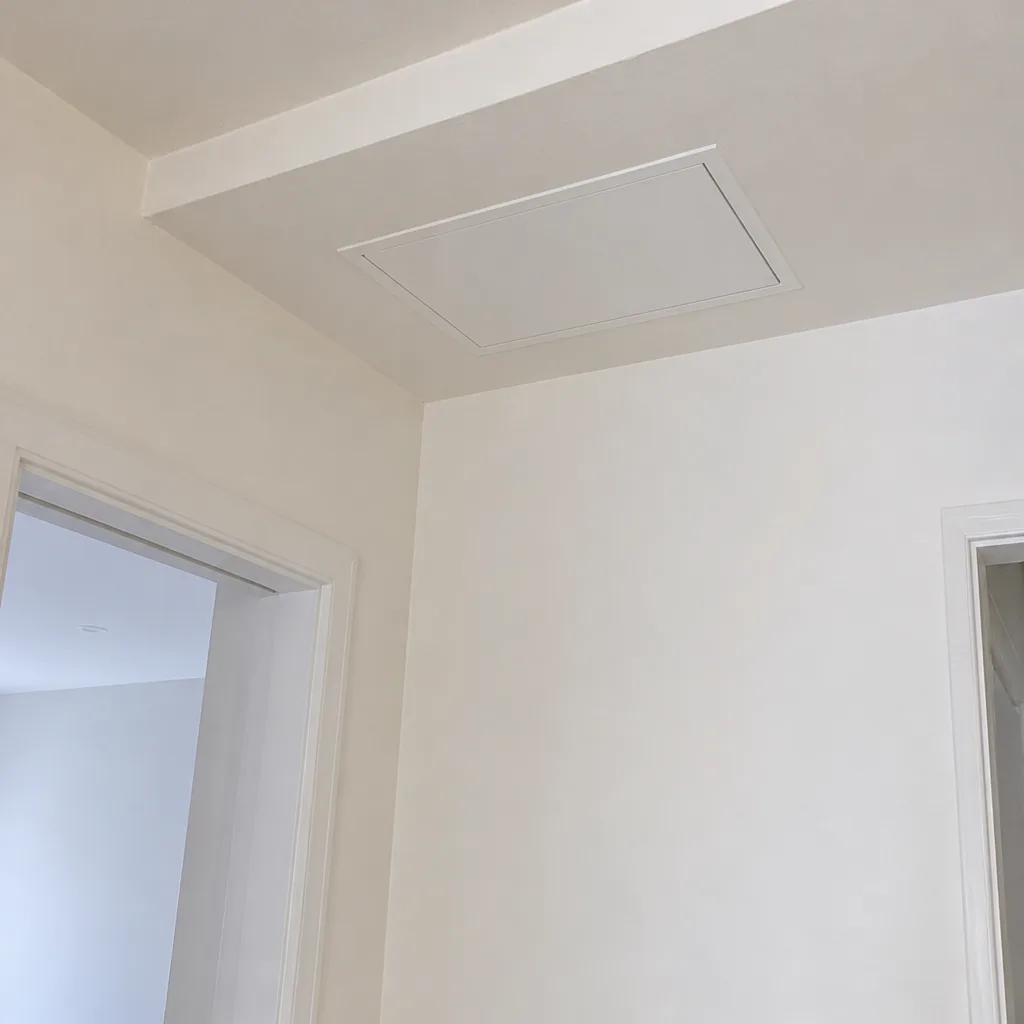
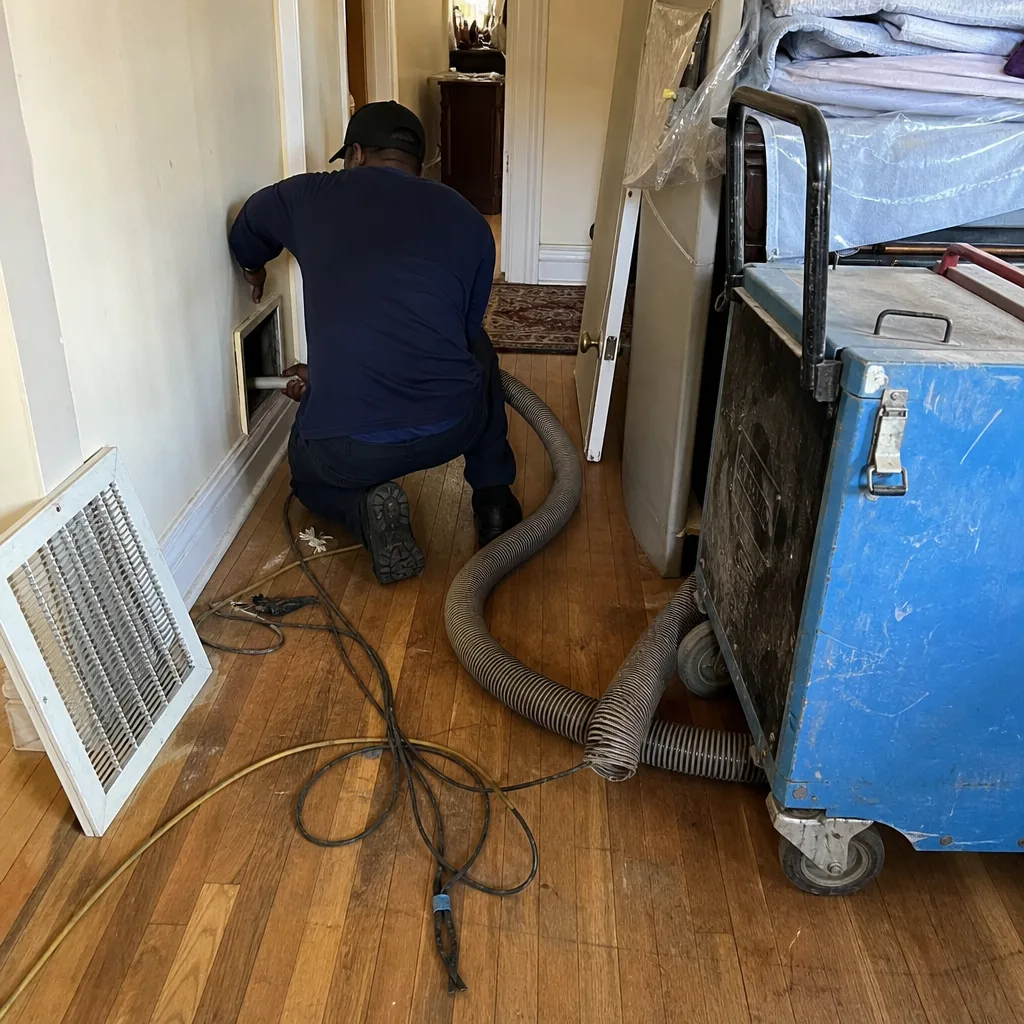
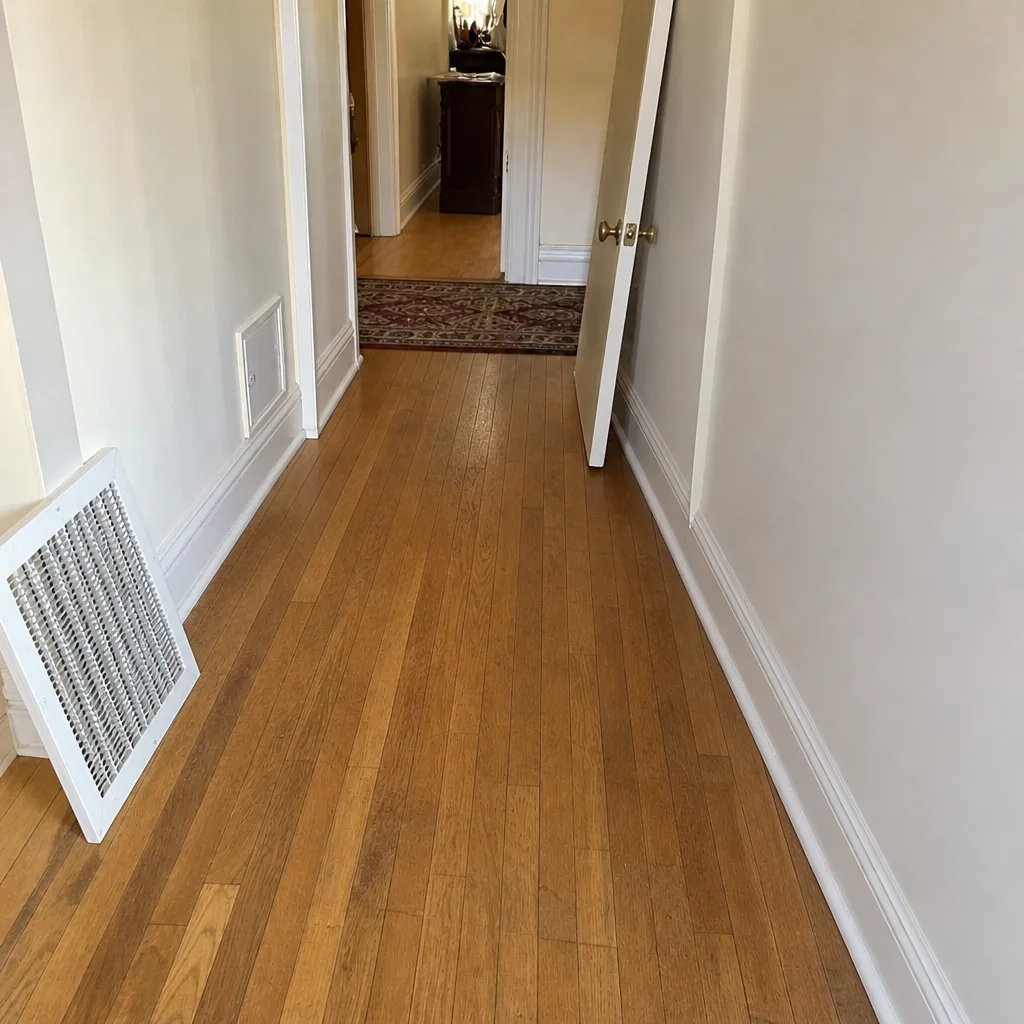
Whole-system duct and dryer vent check with before-and-after photos - you see exactly what came out of your vents
That "$99 whole-house special" is a bait ad - the real number appears once they are in your hallway, or the "clean" is a shop-vac at the register. We photograph the inside of your ducts before and after instead.
The Complete Guide to Air Duct Cleaning in Crown Heights
Most Crown Heights homes were built before central HVAC was standard, which means the ductwork was often retrofitted into buildings that were never designed around it. That single fact changes everything about how duct cleaning works here. Run a rotary brush through a straight, purpose-built duct in a newer house and you get a clean duct. Do the same thing in a brownstone with a narrow chase and a flexible retrofit line snaking around a cast iron radiator and you get a brush stuck against a crushed elbow while the contamination sits untouched a few feet away. The equipment matters, but the building matters just as much.
This guide maps what a legitimate full-system clean involves in Crown Heights: pre-inspection, the components that actually get cleaned, how portable and truck-mounted negative-pressure systems differ, how to verify a deep clean happened, and when sanitization earns its place. Air you can’t see is still air you breathe, and we’d rather you understood the job before anyone quotes it.
Quick Answer
A full-system air duct cleaning in Crown Heights typically starts with a video inspection, then uses negative-pressure containment and rotary brush equipment to remove debris from supply and return ducts, registers, plenums, the air handler coil, and the blower compartment, followed by optional sanitizing and any needed duct repair or sealing. Whole-system pricing here generally runs several hundred dollars and up depending on the number of runs, access difficulty, and whether repair work is needed, with one flat price per system agreed before work starts. The written estimate sets the final price.
Styles & brands we work with
- Whole-home duct cleaning
- Dryer vent cleaning
- Camera inspection
- Sanitizing & deodorizing
Table of Contents
- Why Crown Heights Buildings Change the Job
- What a Full-System Clean Actually Includes
- Truck-Mounted vs. Portable Equipment in Row Houses and Brownstones
- The Pre-Inspection Step Most Cleaners Skip
- How to Verify a Deep Clean Actually Happened
- Sanitizing: When It’s Warranted and When It’s Not
- Duct Repair and Sealing as Part of the Visit
- How Often Ducts Really Need Cleaning in Crown Heights
- What Air Duct Cleaning Costs in Crown Heights
- Common Mistakes to Avoid
- When to Call a Professional
- Frequently Asked Questions
Why Crown Heights Buildings Change the Job
Crown Heights is a neighborhood of layers. Pre-war apartment houses, brownstones and row houses built in the early 1900s, mid-century infill, and a steady stream of renovations that cut new systems into old frames. When central air or forced-air heat gets added to a building like that, the installer works around what’s already there. The result is ductwork that is often flex-duct retrofits running through tight chases, around structural beams, and beside cast iron radiator pipes that predate the air system by half a century.
Those conditions create specific problems:
- Narrow chases. Ducts squeeze through spaces not designed for them, and every squeeze point collects debris faster because airflow slows there.
- Flex-duct kinks and crushed runs. Flexible duct that was bent too sharply during installation restricts airflow, and restricted airflow means dust settles instead of traveling to the filter.
- Shared walls and party-wall penetrations. In attached row houses, duct runs often pass close to neighboring units, which makes containment and negative pressure more important, not less.
- Radiator-era pipe chases. Open chases around heating pipes act as dust pathways that connect floors in ways a duct map won’t show.
- Renovation debris. Plaster dust, sawdust, and drywall grit from a kitchen or bathroom remodel settle in the returns and stay there for years.
Dense urban air adds to it. Crown Heights sits under a lot of traffic and construction dust, and whatever gets into the return side of a system stays in the building until someone removes it. A shop-vac on the visible registers doesn’t reach any of this. The work has to match the building.
What a Full-System Clean Actually Includes
Clean ducts are only half the job. A full-system clean covers every component that air touches between the return grille and the supply register, because contamination doesn’t respect the boundaries a duct-only cleaner draws. Here’s the scope a legitimate clean should follow:
- Supply and return ducts. Every accessible run, cleaned from the inside with rotary brush equipment under negative pressure, so dislodged material is captured rather than blown back into living space.
- Supply registers and return grilles. Removed, cleaned, and reinstalled. The grilles themselves hold a surprising amount of dust that gets pushed back into the airstream the moment the system runs.
- Return plenums. The large return-side chambers before the air handler, often the dirtiest part of a Crown Heights system because they’re rarely accessed.
- Air handler coil. The evaporator coil sits in the airstream and collects dust, which reduces heat exchange and can become a damp surface in humid months.
- Blower compartment and blower wheel. Dust-loaded blower wheels throw less air and run hotter.
- Access openings and seals. Any cut made for cleaning gets sealed properly afterward, because an unsealed access hole is a new leak.
Not every cleaner includes all six. Ask specifically which components are in scope before you compare quotes. A price that only covers the trunk line isn’t competing with a full-system price, even if the numbers look close.
Truck-Mounted vs. Portable Equipment in Row Houses and Brownstones
There are two broad equipment approaches in residential duct cleaning, and Crown Heights’ building stock exposes the difference quickly.
Truck-mounted negative-pressure systems
A truck-mounted unit connects by hose to the duct system and pulls a high volume of air through it, creating strong negative pressure that carries debris out to a collection unit. Where access allows, this is powerful and effective on large, straightforward systems.
Portable professional equipment
Portable systems combine a rotary brush with a HEPA-rated vacuum, like the Rotobrush rotary brush and Nikro HEPA equipment we use. They reach places a truck can’t: third-floor walk-ups, basement runs behind finished walls, narrow chases, and buildings where parking a hose run is simply impossible.
Here’s the part competitors leave out. In a Crown Heights brownstone, a truck-mounted system often can’t reach the full system at all, because the hose run is too long or the access point doesn’t exist. What matters in a row house or brownstone is whether the equipment can hold containment at the point of cleaning. Abatement Technologies air filtration equipment matters for exactly this: it allows containment-level control when a system is heavily contaminated, keeping dislodged material out of living space rather than redistributing it. Professional-grade equipment, not improvised tools, is the standard to hold every quote against. Built for the job, not borrowed from a hardware store.
The Pre-Inspection Step Most Cleaners Skip
You can’t clean a system you haven’t looked inside. Before any brush goes in, a proper pre-inspection should establish what you’re actually dealing with: debris type, moisture, duct condition, and whether there are runs that need repair before cleaning rather than after. In Crown Heights’ older buildings, this step turns up things a visual glance at the registers never will.
What a real pre-inspection includes:
- Video camera inspection of representative duct runs, with footage you can see.
- Airflow measurement at supply registers to establish a baseline.
- Checking the air handler, coil, and blower compartment for dust loading and moisture.
- Identifying crushed, disconnected, or unsealed duct sections, common in retrofit jobs.
- Locating the return plenum and confirming its condition.
- A written scope, so you know exactly what’s being cleaned before the work begins.
A cleaner who quotes a price without looking inside is guessing. In a building with flex-duct retrofits and shared chases, guessing is how a job ends up half done. The pre-inspection is what lets the written estimate reflect the real system.
How to Verify a Deep Clean Actually Happened
This is the question that sits behind most of the hesitation in this trade. A cleaner runs equipment for a while, hands you an invoice, and drives off. How do you know the ducts are actually clean? You verify it, using the same tools a professional used to inspect them.
Ask for these before and after:
- Video inspection footage of the same duct runs. The before and after should be the same location, filmed with the same camera, so you can see the interior change for yourself.
- Airflow readings at supply registers. Restricted ducts and dust-loaded blower wheels reduce airflow; a clean system should show measurable improvement where the problem existed.
- Photographs of the air handler, coil, and blower compartment. These components are the most overlooked and the easiest to prove clean or dirty.
- A written record of what was cleaned. Which runs, which components, what access points were cut and sealed.
Before-and-after photos of your own ducts should be standard, not a favor. If a company can’t show you what the inside of your system looked like before and after, you have no way to confirm the work. Stack that against the low-bid coupon model, where a headline price turns into a much larger invoice once the technician is on site, and the reason to demand proof becomes obvious. One flat price per system, agreed before work starts, with photos to back it up.
Sanitizing: When It’s Warranted and When It’s Not
Cleaning and sanitizing are two separate steps, and treating them as one package is where a lot of unnecessary upselling happens. Cleaning physically removes debris. Sanitizing applies a product to surfaces after cleaning to reduce microbial growth. One doesn’t replace the other, and sanitizing a dirty duct just seals debris in place.
Sanitizing is generally warranted when there’s a real reason for it:
- Confirmed mold growth inside the system, identified through inspection rather than assumed from a musty smell alone.
- A rodent or pest issue that left contamination in the ductwork.
- Smoke or fire residue in the system.
- Water damage or a long period of moisture in the air handler or duct runs.
- A household member with a documented respiratory sensitivity whose doctor has recommended it.
It’s generally unnecessary on a system that’s merely dusty but dry and free of microbial growth. A cleaner who pushes sanitizing before anyone has looked inside is selling a step, not solving a problem. Ask what the inspection found, and what specifically sanitizing will address. If the answer is vague, that’s your answer.
Duct Repair and Sealing as Part of the Visit
Cleaning a system with leaks is a short-term fix. Leaky ducts draw in unfiltered air from basements, chases, and wall cavities, which means the system you just cleaned starts collecting debris again the moment it runs. In Crown Heights’ retrofit-heavy buildings, disconnected flex runs, crushed sections, and unsealed joints are common, and they don’t get better on their own.
Duct repair and sealing done on the same visit closes the loop:
- Reconnecting and repairing damaged runs, so crushed or disconnected ductwork actually carries air where it’s supposed to go.
- Sealing joints and access openings cut for cleaning, so the system is tighter coming out than it was going in.
- Restoring airflow to rooms that never heated or cooled properly because the run was leaking or pinched.
This is where one visit, full system matters. Coordinating a separate contractor after the cleaning means a gap where the system runs dirty and the timeline stretches. Handling repair and sealing in the same visit keeps the work coherent. It also connects to filtration: for clients who want sustained improvement, we stock and install Honeywell and Aprilaire components, so cleaning leads directly into better ongoing air quality rather than ending at the invoice.
How Often Ducts Really Need Cleaning in Crown Heights
There’s no single correct interval. The honest answer depends on the building, the occupants, and what’s happened recently. In Crown Heights, the factors that accelerate buildup are specific:
- Renovation work. A kitchen or bathroom remodel sends fine dust through the whole system. Clean after the work is done, not before.
- Pets. Pet hair and dander load the return side faster than most people expect.
- Dense urban dust. Street and construction dust near busy corridors increases how fast filters and returns load up.
- Older retrofit systems. If the ductwork was added later and includes flex runs and tight chases, debris accumulates at the pinch points.
- Moisture events. Any leak, flood, or long humid stretch warrants an inspection regardless of timing.
A reasonable rule of thumb is to inspect every few years and clean when the inspection shows it’s needed, not on a fixed calendar. Homes with heavy pet traffic, recent renovations, or occupants with respiratory concerns should check sooner. If you’ve just moved into an older Crown Heights building and have no record of the last cleaning, a pre-inspection is the sensible first step. It tells you where you stand without committing to anything.
What Air Duct Cleaning Costs in Crown Heights
Air duct cleaning in Crown Heights is priced per system, not per vent, because the work is defined by the system’s size, access, and condition rather than the number of grilles. A brownstone with a long retrofit run and a tight basement access point takes more time than an open-plan apartment, even with fewer registers. Whole-system pricing here typically lands in the several-hundred-dollar range and climbs with the number of runs, the difficulty of access, and whether repair or sanitizing is added. The estimate is free and the written estimate sets the final price.
What drives the price up or down:
- Number of supply and return runs. More runs, more cleaning time.
- Access difficulty. Basement runs behind finished walls, narrow chases, and third-floor walk-ups all add time.
- System condition. Heavy contamination, mold, or pest debris requires containment-level handling.
- Scope. Ducts only, or the full system including plenums, coil, and blower compartment.
- Repair and sealing. Crushed or disconnected runs that need fixing before the system is sound.
Be wary of any quote that isn’t a single number for the whole system. Per-vent pricing invites the classic bait-and-switch: a low teaser price that becomes a much larger invoice once the technician is on site. One flat price per system, agreed in writing before the work starts, is the standard to hold every quote to.
Common Mistakes to Avoid
- Hiring on price alone. A low headline number usually reflects a scope that only covers the trunk line and visible registers. Ask what’s included before you compare.
- Skipping the pre-inspection. Without video inspection and airflow readings, you’re relying on someone’s word about a system neither of you has seen the inside of.
- Cleaning before a renovation, not after. Renovation dust settles into the system afterward. Schedule the clean once the dust has settled, literally.
- Sanitizing a dirty duct. Sanitizing without cleaning first seals debris in place. Cleaning comes first, always.
- Ignoring leaky ductwork. A clean system with disconnected runs just pulls in unfiltered air again. Repair and sealing belong in the same visit.
- Accepting no proof of work. If there’s no before/after footage or photo evidence of your own ducts, you can’t confirm what was done. Ask for it up front.
- Assuming all Crown Heights systems are alike. A pre-war apartment and a mid-century row house have different duct geometry and different problems. The cleaning plan should reflect the building.
When to Call a Professional
Some situations are clearly worth a professional look. You smell a musty odor every time the system kicks on. Dust builds up on furniture and registers within days of cleaning. Someone in the household has persistent respiratory symptoms with no other explanation. The system hasn’t been cleaned in years and you’ve just moved in. You’ve finished a renovation and the air handler is pulling fine dust. You’ve had a moisture event or a pest issue. Rooms never heat or cool the way they should, which often traces to crushed or disconnected ductwork. Any of these points toward a full-system look rather than a surface clean.
Air Duct Cleaning Crown Heights offers free estimates in Crown Heights. Call (833) 754-9186. We answer 24/7, and fast dispatch runs from 7am to 7pm, Sunday through Friday.
Frequently Asked Questions
Air duct cleaning in Crown Heights is priced per system, and a full-system clean typically starts in the several-hundred-dollar range and rises with the number of runs, access difficulty, and any repair or sanitizing added. Per-vent pricing is a red flag, because it invites a low teaser that grows once the technician is on site. The written estimate sets the final price after inspection. Call (833) 754-9186 for an exact quote, because estimates are free.
Yes. We use portable professional equipment, including Rotobrush rotary brush and Nikro HEPA systems, which reach upper floors, basements, and narrow chases that truck-mounted units can’t. In attached row houses and brownstones, containment is held at the point of cleaning so dislodged debris doesn’t re-enter living space. The cleaning plan is built around the building’s actual duct layout, not a generic template.
Cheaper quotes usually reflect a smaller scope, often covering only the main trunk line and visible registers while skipping the plenums, coil, and blower compartment. The other pattern is bait pricing, where a low headline number becomes a larger invoice once the technician arrives. Ask exactly which components are included and whether the quote is one flat price per system. Call (833) 754-9186 to compare scopes honestly.
Ask for before-and-after video inspection footage of the same duct runs and airflow readings at supply registers, plus photos of the air handler, coil, and blower compartment. A professional should provide proof of your specific system, not generic marketing images. We supply before-and-after photos of your own ducts as standard. Call (833) 754-9186 to book an inspection first.
Inspect every few years and clean when inspection shows it’s needed rather than on a fixed calendar. Homes with heavy pet traffic, recent renovations, or older retrofit ductwork in Crown Heights should check sooner. There’s no universal interval, because condition varies with the building and the occupants. Call (833) 754-9186 to schedule a pre-inspection and get a clear baseline.
Yes. Duct repair and sealing and air quality and sanitizing are handled in the same visit as the cleaning, so you don’t coordinate a second contractor. Cleaning without repair leaves leaks that pull unfiltered air back into the system. Sanitizing follows cleaning and only where inspection shows a reason for it. One visit, full system. Call (833) 754-9186 for a free estimate.
The Bottom Line
Air duct cleaning in Crown Heights is a system-level job, not a vacuum pass at the registers. The building stock dictates the approach: narrow chases, retrofit flex duct, shared walls, and radiator-era pipe runs mean the equipment has to reach what a generic cleaner can’t, and the scope has to cover plenums, coils, and blowers, not just the trunk line. Verify the work with before-and-after footage and airflow readings, treat repair and sealing as part of the job, and reserve sanitizing for systems that actually need it. One flat price per system, agreed in writing, is the standard to hold every quote against.
Related Reading
Start with our overview of air duct cleaning in Crown Heights, then read the full breakdown of air duct cleaning service and what each visit covers. If your building’s system hasn’t been serviced in a while, our HVAC cleaning guide explains the air handler and coil side. Laundry dryers in older buildings deserve their own look, so see our dryer vent cleaning page before your next appointment.
Call (833) 754-9186 for a free estimate. We answer 24/7, with fast dispatch from 7am to 7pm, Sunday through Friday.
Written by the team at Air Duct Cleaning Crown Heights.
See the difference
 Before
 After
 Before
 After
 Before
 After