
Last updated November 22, 2026
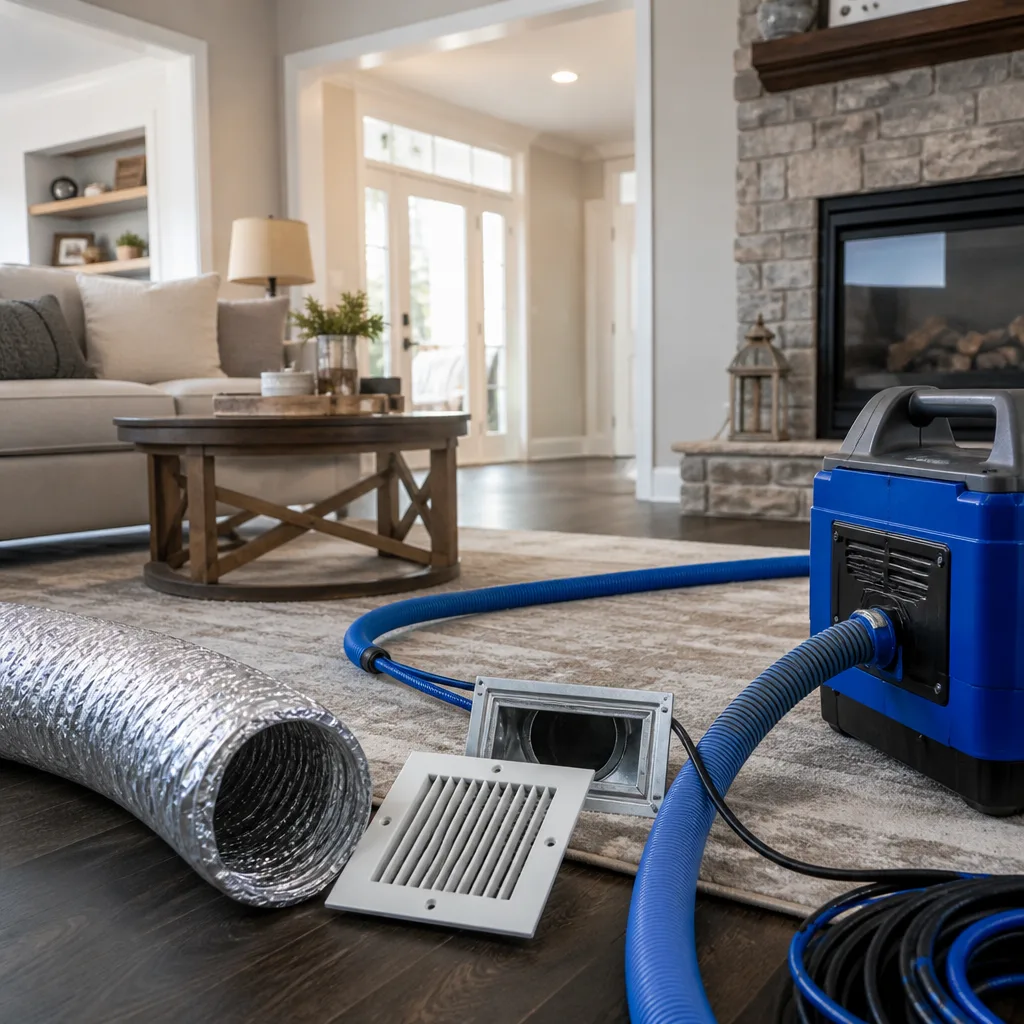 Whole-home duct cleaning
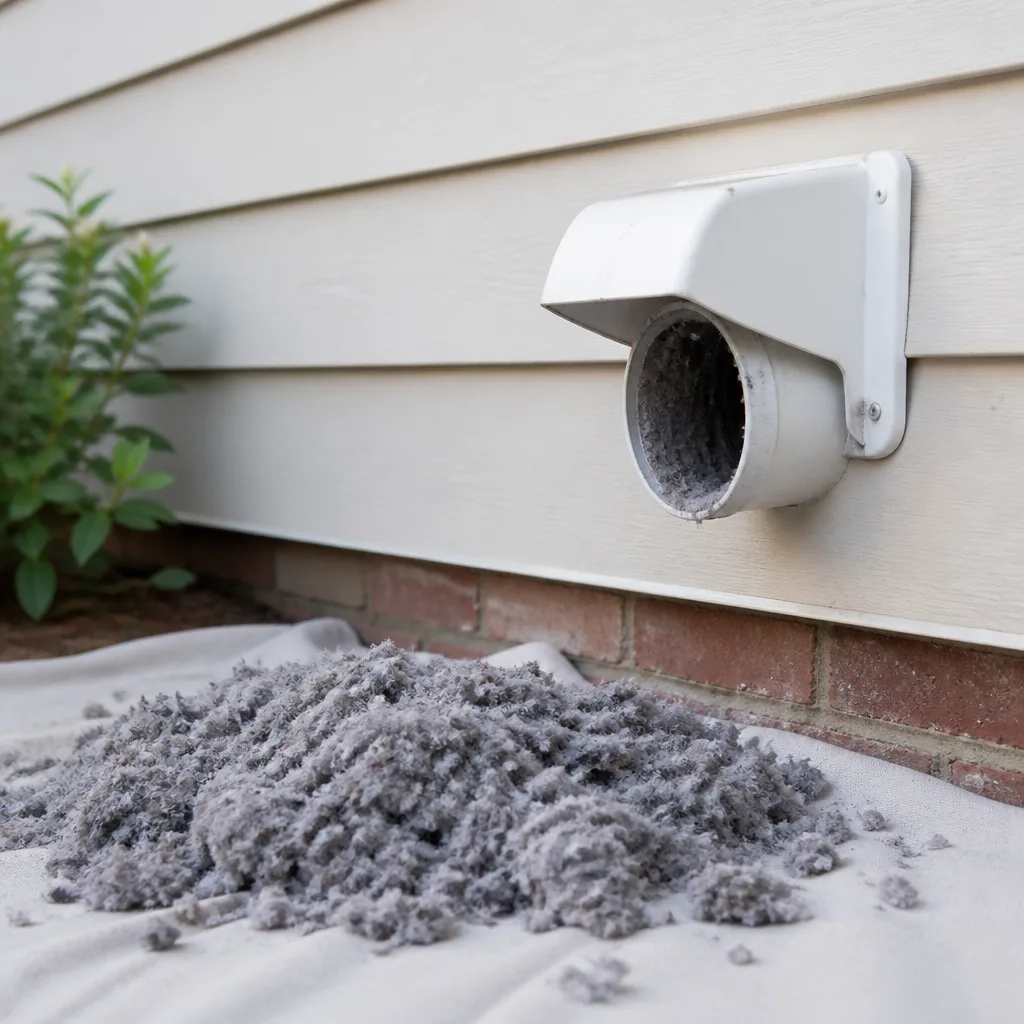 Dryer vent cleaning
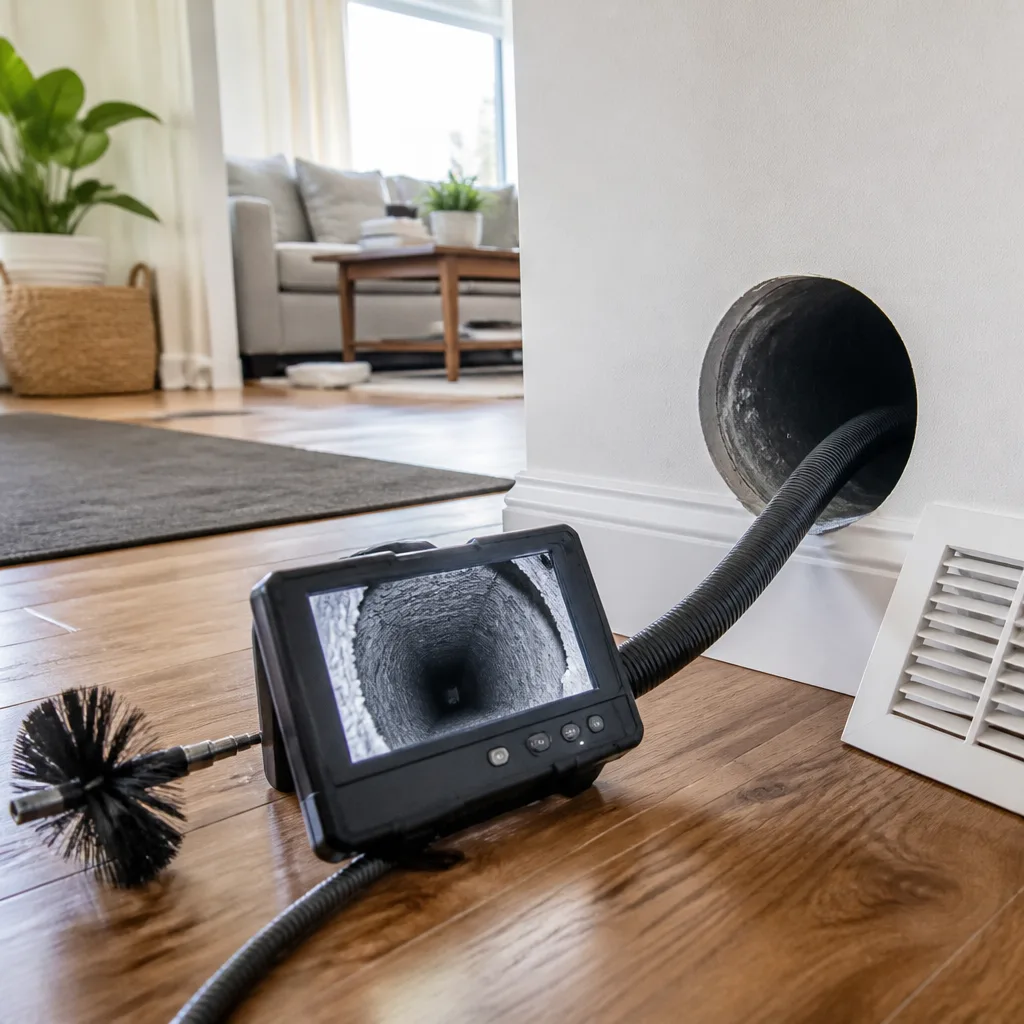 Camera inspection
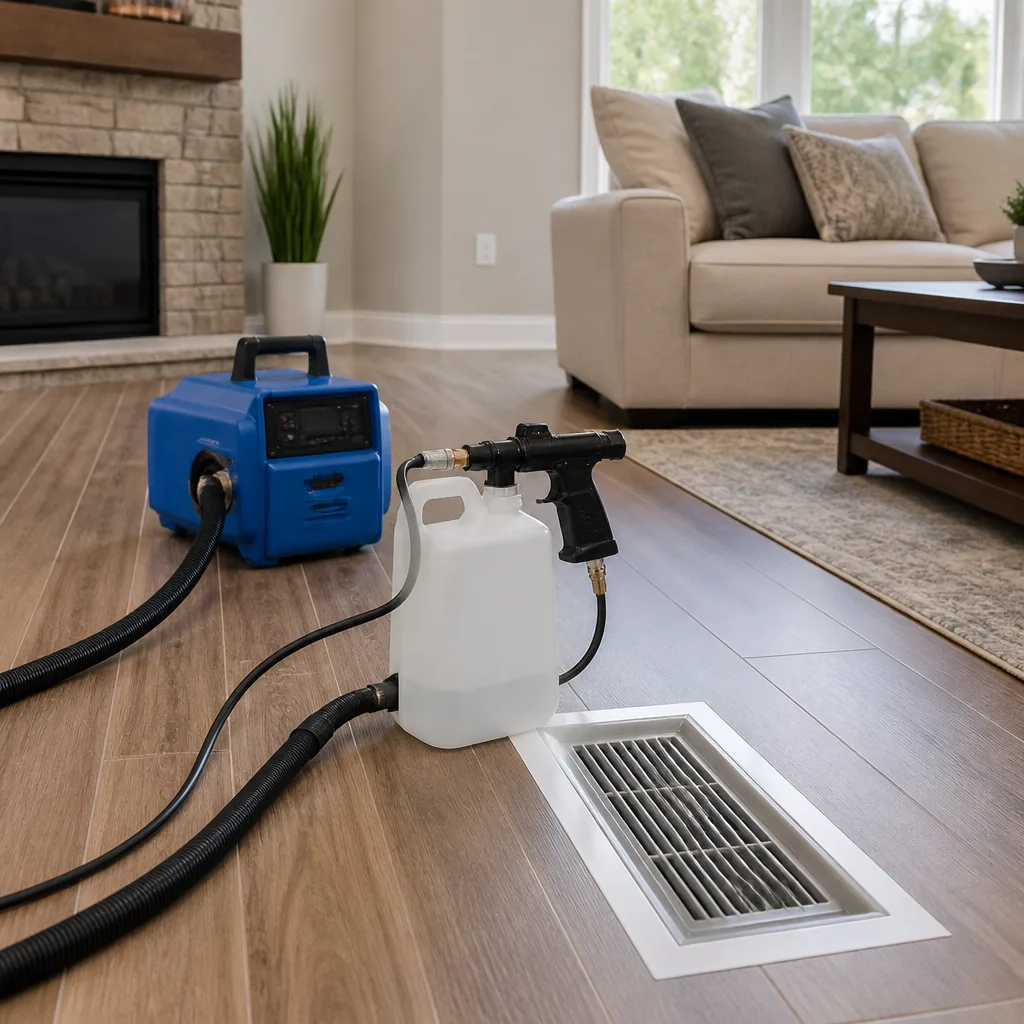 Sanitizing & deodorizing
Whole-system duct and dryer vent check with before-and-after photos - you see exactly what came out of your vents
That "$99 whole-house special" is a bait ad - the real number appears once they are in your hallway, or the "clean" is a shop-vac at the register. We photograph the inside of your ducts before and after instead.
Air Duct Cleaning Warning Signs: A Crown Heights Homeowner’s Reference Guide
A musty smell that only shows up when the heat kicks on isn’t a “basement smell.” It’s your duct system telling you exactly what’s inside it. In Crown Heights brownstones and pre-war conversions, that’s often years of accumulated organic material, construction dust from the block, and debris from ductwork that was never designed for the way the building is used now. Most homeowners misread these signals as unrelated annoyances: a dusty shelf, a cold back bedroom, a winter cough. This guide maps each warning sign to its probable cause inside your HVAC system, so you know what you’re actually seeing, what it means, and whether to schedule service or stop running the system entirely.
Quick Answer
The main air duct cleaning warning signs are musty or “wet basement” odors when the system runs, visible dust streaks at supply registers or return grilles, rooms that never heat or cool evenly, utility bills that climb without a rate change, and allergy symptoms that get worse indoors. Any one of these points to contamination, leakage, or filter neglect in the duct system. Two or more together almost always mean the system needs a professional inspection.
Styles & brands we work with
- Whole-home duct cleaning
- Dryer vent cleaning
- Camera inspection
- Sanitizing & deodorizing
Table of Contents
- Symptom-to-Cause: What Each Warning Sign Actually Means
- Odors When the Heat Turns On
- Visible Dust at Registers and Return Grilles
- Uneven Room Temperatures and Rising Bills
- Recurring Allergy Symptoms That Follow You Indoors
- Contamination vs. Filter Neglect vs. Duct Leakage
- Crown Heights Triggers: Construction, Conversions, and Old Flex Duct
- The Safe Inspection You Can Do Yourself
- Emergency Signs vs. Scheduled-Service Signs
Symptom-to-Cause: What Each Warning Sign Actually Means
Most people treat duct problems as a single category. They aren’t. Each symptom you notice in a Crown Heights home comes from a specific failure inside the system, and identifying which one you’re dealing with is what determines whether you need cleaning, repair, sealing, or a filter change. Here’s the mapping we use when we assess a system.
- Musty odor when heat or AC runs: organic growth or moisture in the duct interior, or debris sitting on a damp evaporator coil. Odor that appears only during one mode points toward the component that mode activates.
- Visible dust streaks at supply registers: contamination in the trunk lines feeding that register, or a pressure imbalance pulling unfiltered air through gaps in the duct.
- Dust settling fast on horizontal surfaces: return-side leakage or a filter that’s bypassing air around its edges rather than through the media.
- Rooms that never reach temperature: duct leakage in the run serving that room, crushed or disconnected flex duct behind a wall, or blocked balancing dampers.
- Rising utility bills without a rate change: the system working harder to compensate for lost air volume through leaks.
- Allergy symptoms that improve away from home: airborne particulate coming from the supply side of the system.
- Dry or scratchy throat in one specific room: typically low airflow drying the air in that space, not a whole-house humidity issue.
The key insight is that cleaning alone won’t fix a leakage problem, and sealing alone won’t remove years of accumulated debris. They’re separate issues that get misdiagnosed as one. A system with both needs both, and doing them in the wrong order wastes money.
Odors When the Heat Turns On
An odor that appears the moment the blower starts is the single most reliable early warning sign of duct contamination. When the system is off, the duct interior sits still and the smell stays contained. The moment air moves, whatever is growing or decaying on the duct walls gets carried into every room.
In Crown Heights, this shows up most often in brownstones where a previous renovation left construction dust in the ductwork, or where an older system has been running with an undersized filter for years. The dust that settles inside a duct is organic: skin cells, pet dander, fabric fibers, cooking grease, and paper dust. Add any moisture at all, and it becomes a growth medium. That’s why the smell reads as “damp” or “basement” rather than “dirty.”
Not every odor is the same contamination problem, though. The type of smell tells you something:
- Musty or earthy: microbial growth on duct surfaces, usually on the return side where air is warmest and dirtiest.
- Sharp or chemical: off-gassing from new materials, sealants, or a recent renovation, which settles in the ducts and re-circulates for months.
- Burning or hot-plastic: a mechanical issue, not a cleaning issue. Stop running the system and have it looked at.
- Gas smell: stop, ventilate, and call your gas utility immediately. This is never a duct cleaning matter.
If the smell is musty and consistent, the fix is a full cleaning of the supply and return sides with HEPA-rated capture, followed by sanitizing. We use Nikro HEPA-rated vacuum equipment so that the debris dislodged during cleaning is captured rather than pushed into your living space. For systems with heavier contamination, Abatement Technologies negative-air equipment lets us contain the work area during the process. You can read more about our full approach on our Air Duct Cleaning Crown Heights page.
Visible Dust at Registers and Return Grilles
Dust around a register isn’t always coming from the duct. Some of it is normal household dust settling on a surface that has a constant air current passing over it. The distinction matters, because cleaning a duct that isn’t dirty is a waste of money, and cleaning a duct while ignoring a leakage problem leaves the dust coming back within weeks.
Here’s how to tell the difference:
- Look at the grille face vs. the slot behind it. Dust on the outside face of the grille is household dust. Dust visibly packed into the slot behind it, or streaks radiating out from the slot onto the surrounding wall or ceiling, is coming from inside the duct.
- Check the return grille specifically. Return grilles pull air in and collect far more debris than supply registers. If the return is heavily loaded but supplies are clean, the contamination is concentrated on the return side.
- Wipe the register with a white cloth and hold it up to the light. Gray or black residue that smears indicates fine particulate; gritty tan residue is construction or masonry dust.
- Note the pattern. Dust concentrated at one or two registers suggests a localized issue in the branches feeding them. Dust at every register points to a system-wide problem.
If you see a dust ring on the ceiling or wall around a register, that’s a sign of air escaping around the boot rather than through it. That’s a sealing issue, and it’s worth fixing alongside cleaning rather than after. A loose boot connection lets unfiltered air from the wall cavity enter the supply stream.
Uneven Room Temperatures and Rising Bills
A cold bedroom at the end of a hallway is often described as “just how old houses are.” Sometimes that’s true. But in a Crown Heights brownstone, it’s frequently duct leakage, a crushed flex run, or a disconnected joint that a renovation crew covered over with drywall. The symptom looks like an HVAC capacity problem. The cause is usually a duct integrity problem.
Leakage affects two things at once. First, it moves conditioned air into the wall cavities, attic, or basement instead of into the room, so that room never gets the airflow it needs. Second, it pulls unconditioned air into the system, which the equipment then has to heat or cool. You end up paying for air you never receive and for air you didn’t mean to condition.
The signs that point specifically to duct leakage:
- One room or a small group of rooms consistently underperforms while the rest of the house is fine
- You can feel weak airflow at a register even when the blower is at full power
- Dust collects near the baseboard or along the wall in a specific area, suggesting air escaping at a joint
- Utility bills climbed gradually over several years, not suddenly after a rate change
- The system runs longer than it used to and still doesn’t satisfy the thermostat
This is where cleaning and repair belong together. Duct repair and sealing fix the loss of air; cleaning removes what the system has been pulling in through the leaks. Doing one without the other gets you a partial fix. We handle both in a single visit, which matters in a Crown Heights walk-up where coordinating a second contractor is a genuine hassle. Our air duct cleaning service includes an integrity check so that leaks don’t get cleaned around and forgotten.
Recurring Allergy Symptoms That Follow You Indoors
If your symptoms improve when you leave the house and return when you get home, the problem may be inside. That pattern is one of the strongest indicators of airborne particulate in a home’s supply air. It’s not proof on its own, and we always recommend talking to a doctor about symptoms, but the pattern itself is worth taking seriously as a clue about your home environment.
Airborne particulate in a duct system comes from several sources at once: settled dust re-entrained by airflow, debris that got past a poor filter fit, pet dander that has collected on duct walls, and mold spores from any moisture problem in or near the system. Cleaning removes the reservoir. Sealing prevents new material from entering. Filtration improvements keep the system cleaner going forward.
For Crown Heights families, particularly those with young children or pet owners, we often recommend looking at filtration once cleaning is complete. A standard 1-inch filter with a loose fit lets air bypass the media entirely, which means the dust in the duct came from somewhere it shouldn’t have. Upgrading to a better-sealed filter housing or a media cabinet changes the picture. We work with Honeywell and Aprilaire components, which we stock and install so that the filtration improvement is done as part of the same overall service rather than handed off to a separate contractor. The full indoor air quality side of our work lives on the HVAC cleaning page.
Contamination vs. Filter Neglect vs. Duct Leakage
Three different problems produce similar symptoms, and mixing them up is the most common reason a homeowner spends money and still smells the smell. Here’s the distinction.
Filter neglect is the easiest to rule out and the most frequently mistaken for duct contamination. When a filter is loaded or badly fitted, dust bypasses it and enters the system. The symptom is dust on surfaces and sometimes a slight musty smell. The fix is a properly sized, well-seated filter, changed on the manufacturer’s schedule. If you replace the filter and the smell and dust return within weeks, the problem is downstream of the filter, inside the duct.
Contamination is what’s actually growing or accumulated on the duct interior. It doesn’t go away with a filter change. Symptoms include consistent odor tied to system operation, visible dust streaks at registers, and allergy symptoms that track with time at home. The fix is professional cleaning. The only real test is looking inside the duct, which a technician can do with a camera during an inspection.
Duct leakage is a structural issue. Symptoms include uneven room temperatures, weak airflow at specific registers, and bills that rise even after filter maintenance. The fix is repair and proper sealing. Cleaning a leaky system without sealing it means the dirt comes back. Sealing without cleaning means you’ve sealed in whatever was already there.
Coil fouling is a fourth problem worth naming. A dirty evaporator coil produces odor and reduces cooling efficiency, and it’s often misattributed to the ducts. A proper HVAC cleaning includes the indoor coil because it’s part of the air path. That’s why we don’t treat duct cleaning as a standalone service.
Crown Heights Triggers: Construction, Conversions, and Old Flex Duct
Crown Heights has its own version of this problem, and it comes from three specific conditions that exist in this neighborhood more than many others.
Nearby construction. When a building goes up or a townhouse renovation happens on the block, the dust doesn’t stay on the site. Fine masonry and drywall particulate drifts for weeks, and any duct system with a return leak or a poorly sealed boot pulls that dust straight into the home. If a nearby project has run for months, and you’re seeing new dust or a smell that wasn’t there before, the system is a likely entry point.
Shared HVAC chases in multi-family conversions. Many Crown Heights brownstones have been divided into multiple units, and the original duct or chase work was often adapted, spliced, and rerouted to serve separate apartments. Those adaptations are frequently where gaps, disconnected runs, and crossed returns hide. A return from one unit can share space with a supply for another in tight chases, which means dust or odor from one unit can find its way into another. If you smell something in your apartment that you can’t trace to your own kitchen or bathroom, this is a real possibility worth investigating.
Old flex duct deterioration. Flexible duct has a limited lifespan. The inner liner can tear, the insulation can degrade, and the outer jacket can separate. When that happens, the duct essentially leaks through its own walls, and it can shed fiberglass fragments into the air stream. In any Crown Heights home where the ductwork predates a major renovation, the flex runs are worth inspecting. If a run has failed, cleaning it doesn’t help; it needs to be repaired or replaced as part of the job.
Add the ordinary conditions of a dense, older neighborhood, and the case for regular cleaning gets stronger, not weaker. You can see what a full system clean involves on our air duct cleaning service page.
The Safe Inspection You Can Do Yourself
You don’t need to open anything to gather useful evidence. There’s a lot you can check safely with a flashlight, a phone camera, and a cloth, and what you document helps a technician know what they’re dealing with before they even open a panel.
- Photograph each register and return grille. Take one straight-on photo and one at an angle so the inside of the slot is visible. Do this for every register in the house.
- Wipe one supply register and one return grille with a clean white cloth. Photograph the cloth with the register in frame. The color of the residue tells a technician a lot: gray and smeary is organic, tan and gritty is construction dust.
- Note the location of the smell. Walk through the house with the system running and note which rooms carry the odor most strongly. This narrows the problem to specific branches or zones of the system.
- Check the filter. Look at the filter’s date and condition. If it’s black, loaded, or visibly out of position within its slot, that’s your first fix, before any other step.
- Feel the airflow at every register with your hand. A noticeable difference between rooms is a sign of a leakage or balancing problem, not just a cleaning one.
- Photograph any dust patterns on walls or ceilings near registers. Streaks radiating out from a register slot are the strongest visible evidence of an internal dust problem.
What you should not do is remove a section of duct, poke anything into the duct beyond the visible grille, or open the air handler. Ductwork can contain sharp metal edges, and the air handler has electrical components and moving parts. Between the grille face and the inside of the system, leave it to a professional.
The same cautions apply to your dryer vent. A clogged dryer vent is a fire risk, not just an efficiency issue, and cleaning it is a separate professional service from duct cleaning. We cover the details on our dryer vent cleaning page, and if you’ve never had the vent looked at, it belongs on the inspection list alongside the ducts.
Emergency Signs vs. Scheduled-Service Signs
Most duct problems are a schedule-the-service issue. Some are not. Knowing the difference tells you when to keep running the system and when to turn it off.
Turn the system off and call for service:
- You smell burning, hot plastic, or an electrical odor when the system runs
- You see visible moisture, standing water, or dripping inside a duct or at a register
- You notice visible microbial growth inside a duct or on the coil
- Any family member has respiratory symptoms that clearly worsen when the system runs
- You smell gas anywhere near the equipment
Schedule a service call:
- A musty odor that appears only when the system runs
- Dust streaks at registers or dust that returns quickly after cleaning surfaces
- One or more rooms that never reach the thermostat setpoint
- Utility bills trending higher over multiple seasons
- Dust or odor that appeared after a renovation or nearby construction
- A dryer that takes more than one cycle to dry a load (check the vent)
The first list means stop running the system and get it looked at. The second list means don’t panic, but don’t wait indefinitely either. Duct issues don’t improve on their own, and the longer a moisture problem sits inside a system, the more it spreads. Fast dispatch runs from 7am to 7pm, Sunday through Friday, and we’re closed on Saturday.
Common Mistakes to Avoid
- Assuming a filter change solves everything. A new filter fixes filter neglect. It does nothing for contamination already inside the duct or for leakage in the runs. If the symptom comes back in two weeks, the filter wasn’t your problem.
- Booking the lowest bid and getting less work. If a quote is dramatically lower than others, ask what’s included: return side, supply side, coil, sanitizing, containment, repair. A price that covers one side of the system is a price for half the job.
- Cleaning without sealing. In a Crown Heights brownstone with open chases and old connections, a cleaned system that still leaks pulls new dust in within weeks. Repair belongs in the same visit.
- Ignoring the smell because the house is old. “Old building smell” is not a category. It’s accumulated particulate and moisture in the duct, and it doesn’t need to be there.
- Skipping the dryer vent. Duct-only companies often leave the dryer vent off the list. It’s a separate system with a fire risk attached to it, and it belongs in the same inspection.
- Doing a partial inspection yourself and stopping there. Looking at one register and deciding the system is clean misses the returns, the coil, and the runs behind the walls, which is exactly where the problems hide.
- Putting off repair after a renovation. Construction dust that enters the system during a renovation stays there. If you’ve just finished work on the house, schedule the inspection now rather than waiting for symptoms.
See the difference
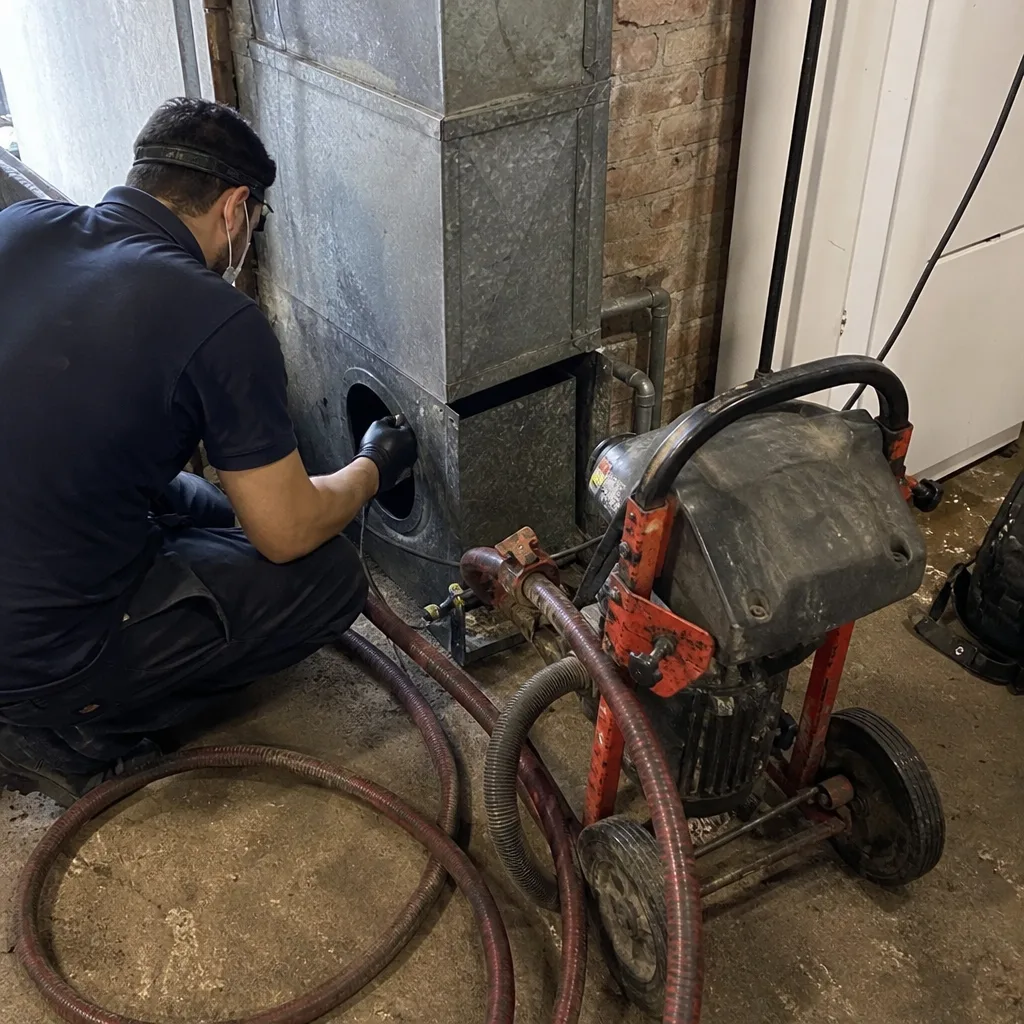 Before
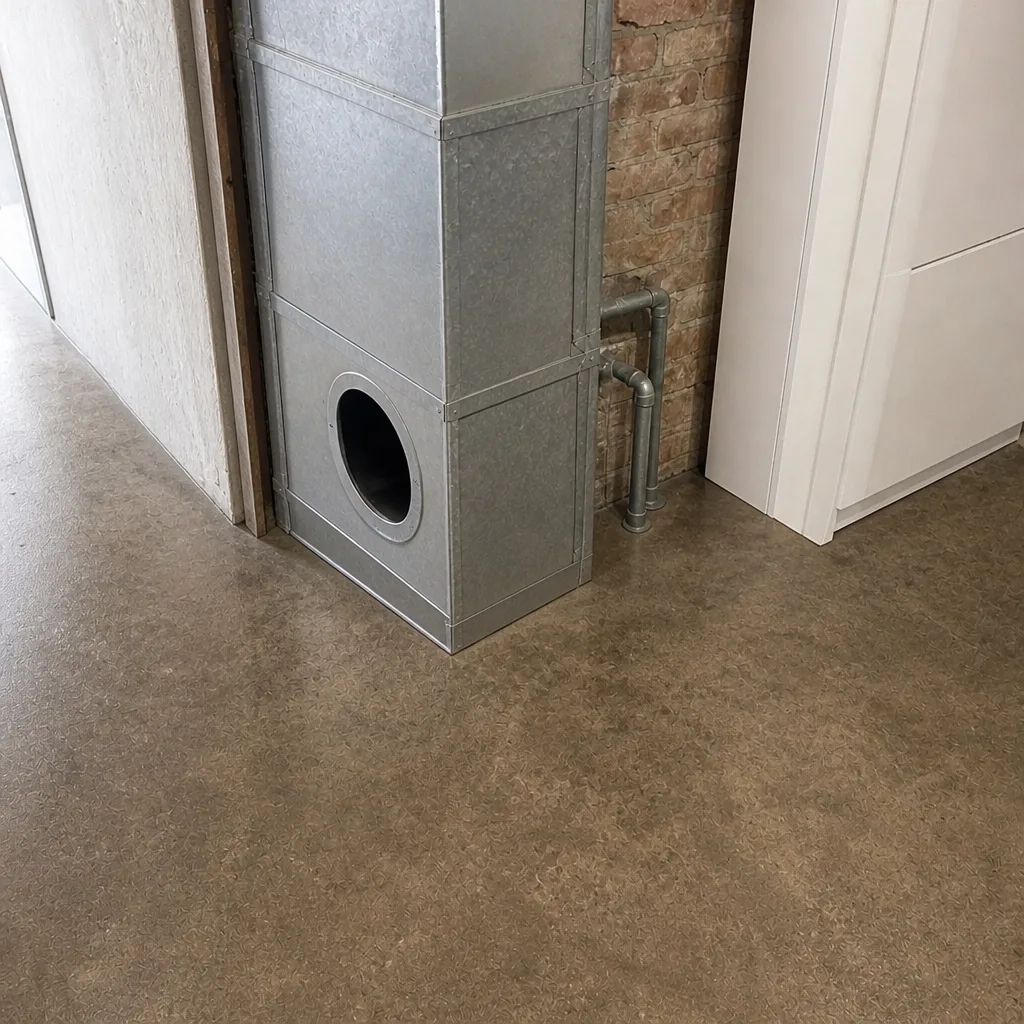 After
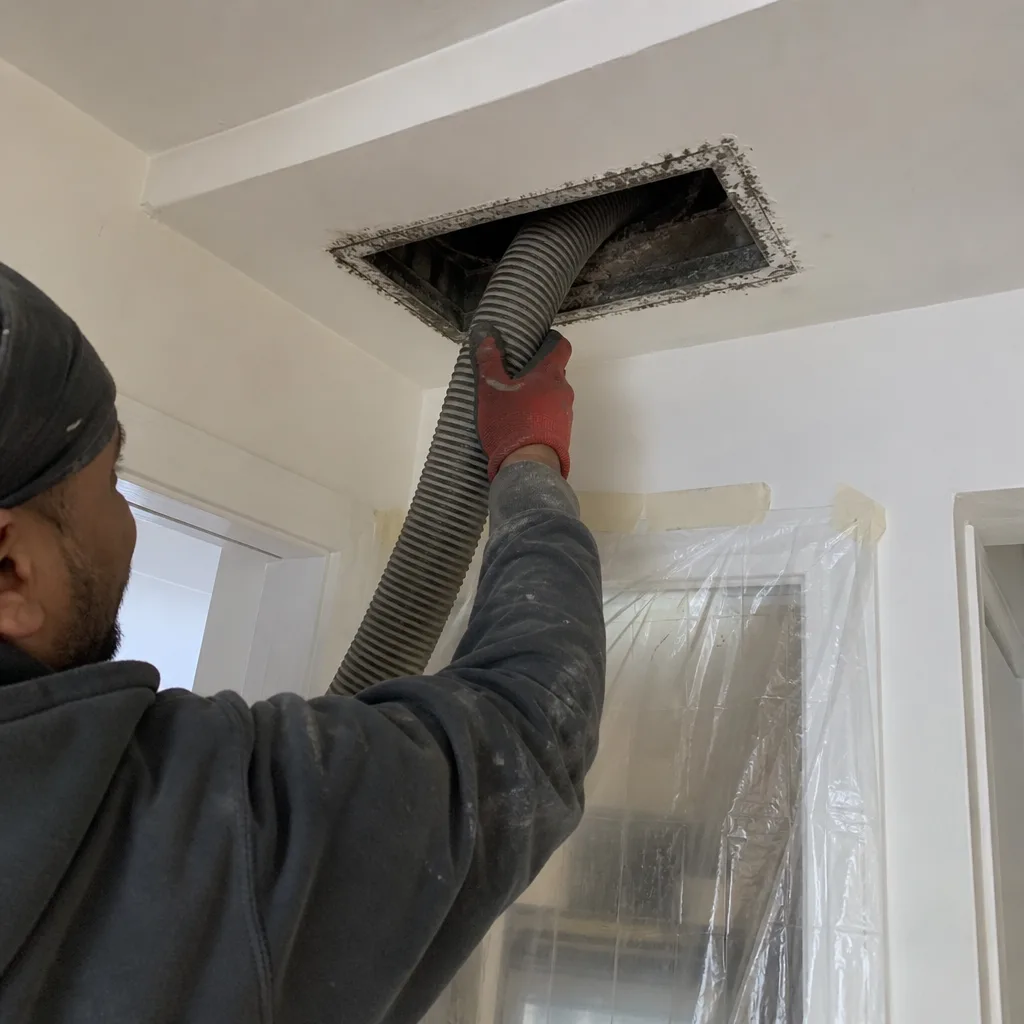 Before
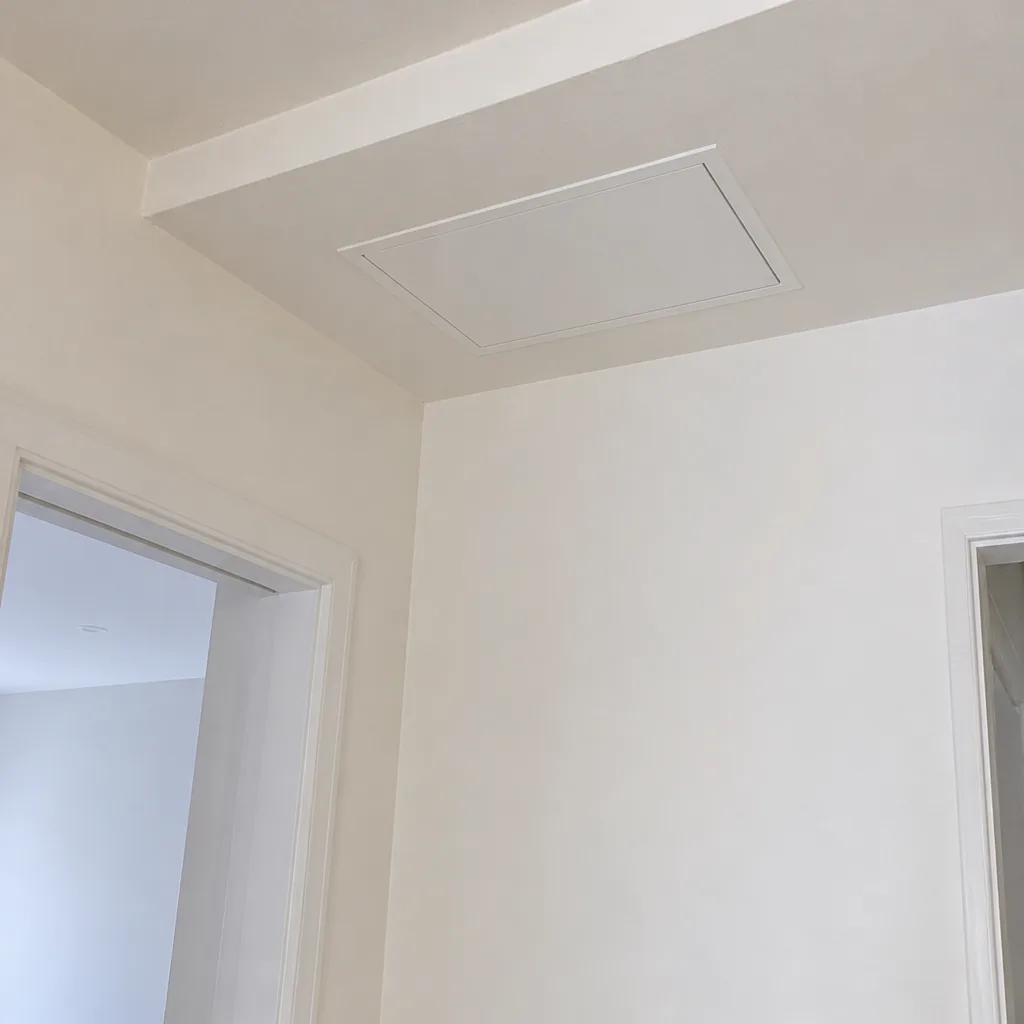 After
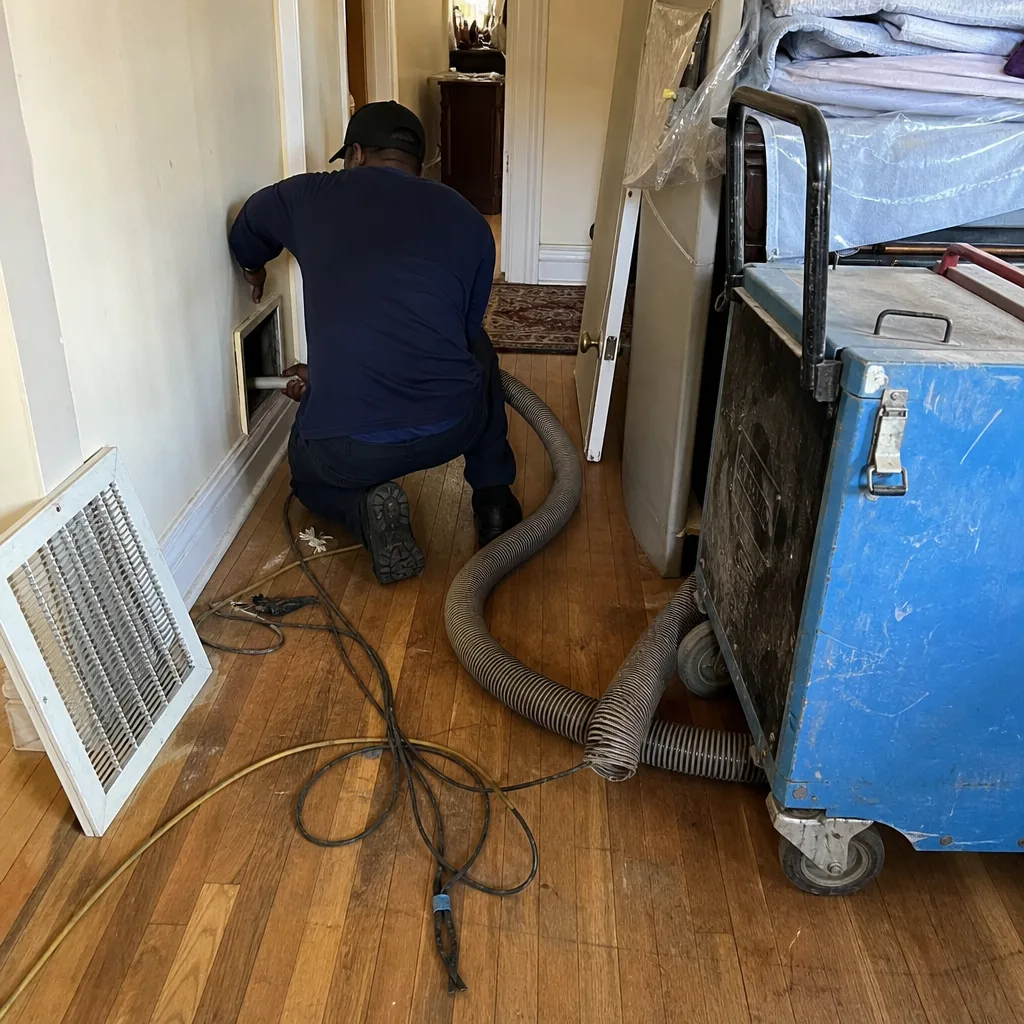 Before
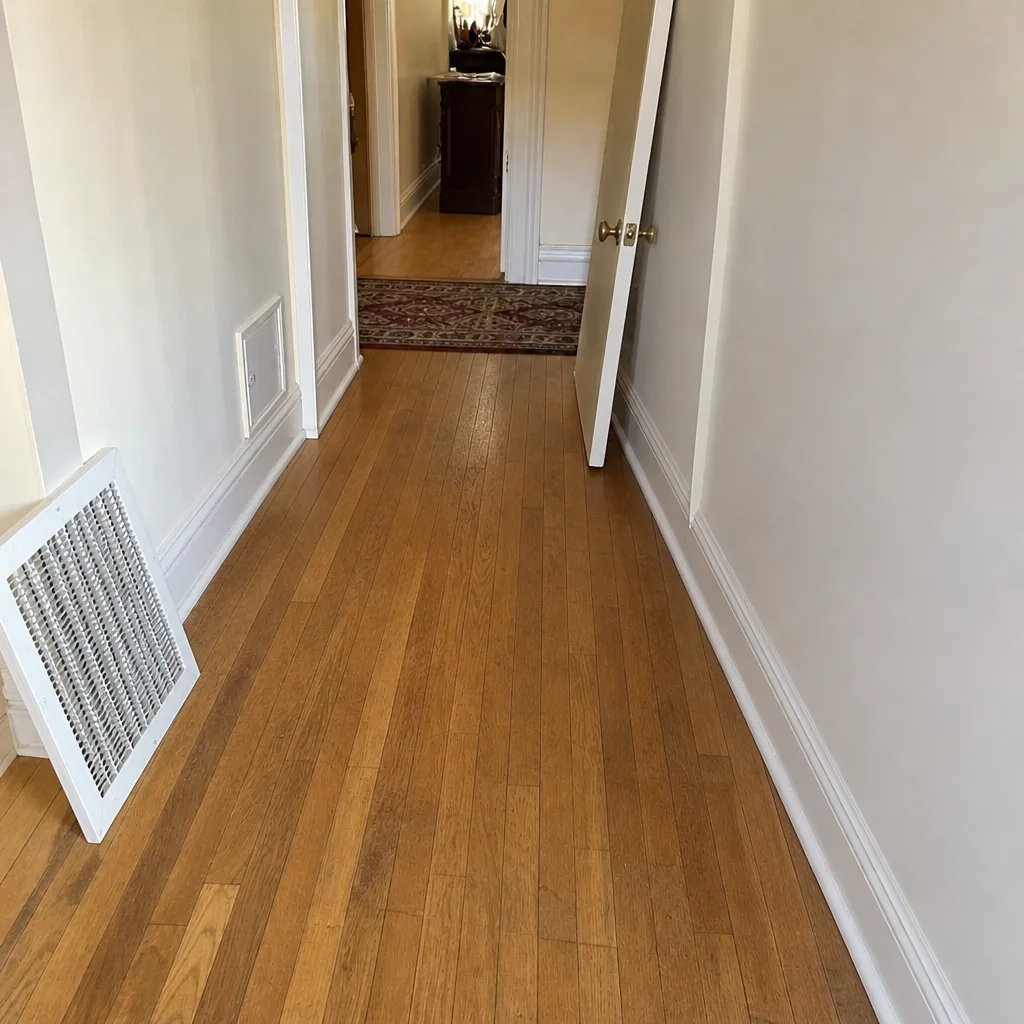 After
When to Call a Professional
Call a professional when you see two or more of the warning signs in this guide at once, when a smell appears specifically during system operation, when a room consistently underperforms on temperature, or when a renovation or nearby construction has recently disturbed the building. Call sooner if you see visible moisture or microbial growth inside a duct, or if you notice burning or gas odors. Those are stop-and-call situations, not wait-and-see ones. A trained technician can inspect inside the system with a camera, identify whether you’re dealing with contamination, leakage, or filter neglect, and quote a fixed per-job price based on the written estimate. Air Duct Cleaning Crown Heights offers free estimates in Crown Heights. Call (833) 754-9186. We answer 24/7. Fast dispatch from 7am to 7pm, Sunday through Friday.
Frequently Asked Questions
Air duct cleaning in Crown Heights is priced per job, not per vent, and the written estimate you receive after inspection sets the final price. Pricing depends on the size of the system, the number of supply and return runs, the level of contamination, and whether repair or sanitizing is included. We don’t quote per-vent teaser prices, because they don’t reflect the actual work. Call (833) 754-9186 for a free estimate. We answer 24/7. Fast dispatch from 7am to 7pm, Sunday through Friday.
Cheaper quotes usually cover less: one side of the system instead of both, no HEPA-rated vacuum equipment, no containment, and no repair included. A low per-vent price gets a technician into the house, then additional costs appear at the door. Ask what’s actually included before comparing numbers. We operate on one flat price per system agreed before work starts, with no per-vent pricing, and we provide before-and-after photos of your own ducts. Call (833) 754-9186 for an estimate that reflects the full job.
Ask two things before booking: whether the company uses professional-grade equipment, and whether they document the work with before-and-after photos. Rotobrush rotary brush systems and Nikro HEPA-rated vacuums are the equipment standard for professional work, and a reputable technician will show you the inside of the duct before and after. If a company can’t show you the system’s condition before and after, you don’t have proof of a completed job. Call (833) 754-9186 to schedule.
Most systems benefit from cleaning every few years, and certain conditions call for it sooner: a recent renovation, a nearby construction project that’s been running for months, a moisture or mold event in the home, pet ownership, or a system that’s never been cleaned. In Crown Heights brownstones with older ductwork, we often find the interval should be shorter than the general guideline because of shared chases and older flex duct. Call (833) 754-9186 to find out what your specific system needs.
Airborne particulate in the duct system can aggravate allergy symptoms in sensitive people, particularly when symptoms track with time spent at home and improve when you leave. This is a pattern worth noticing, not a medical diagnosis. Talk to a doctor about symptoms, and have the system inspected for the source. Cleaning removes the reservoir, sealing prevents new material from entering, and improved filtration keeps it clean. Call (833) 754-9186 for a free inspection.
Duct cleaning focuses on the ductwork, including the supply and return sides, that carries air through the home. HVAC cleaning includes the air handler, the evaporator coil, and the components inside the equipment where dust and microbial growth accumulate. A full system clean covers both, which is why we treat them as parts of a single service rather than separate appointments. Call (833) 754-9186 to discuss which service your system needs.
The Bottom Line
The warning signs of duct contamination are specific, they map to specific causes, and they’re easy to dismiss as ordinary household issues. A musty smell that only appears when the system runs, dust streaks at registers, rooms that never reach temperature, bills that trend up, and allergy symptoms that track with time at home are all pointing at the system, not at the house. The distinction between contamination, filter neglect, and duct leakage determines whether the right fix is cleaning, a filter change, or repair and sealing. In Crown Heights, where older brownstones and recent construction create their own conditions, getting the diagnosis right is what saves money. If any of this sounds familiar, call (833) 754-9186 for a free estimate. We answer 24/7. Fast dispatch from 7am to 7pm, Sunday through Friday.
Written by the team at Air Duct Cleaning Crown Heights.