
Last updated November 22, 2026
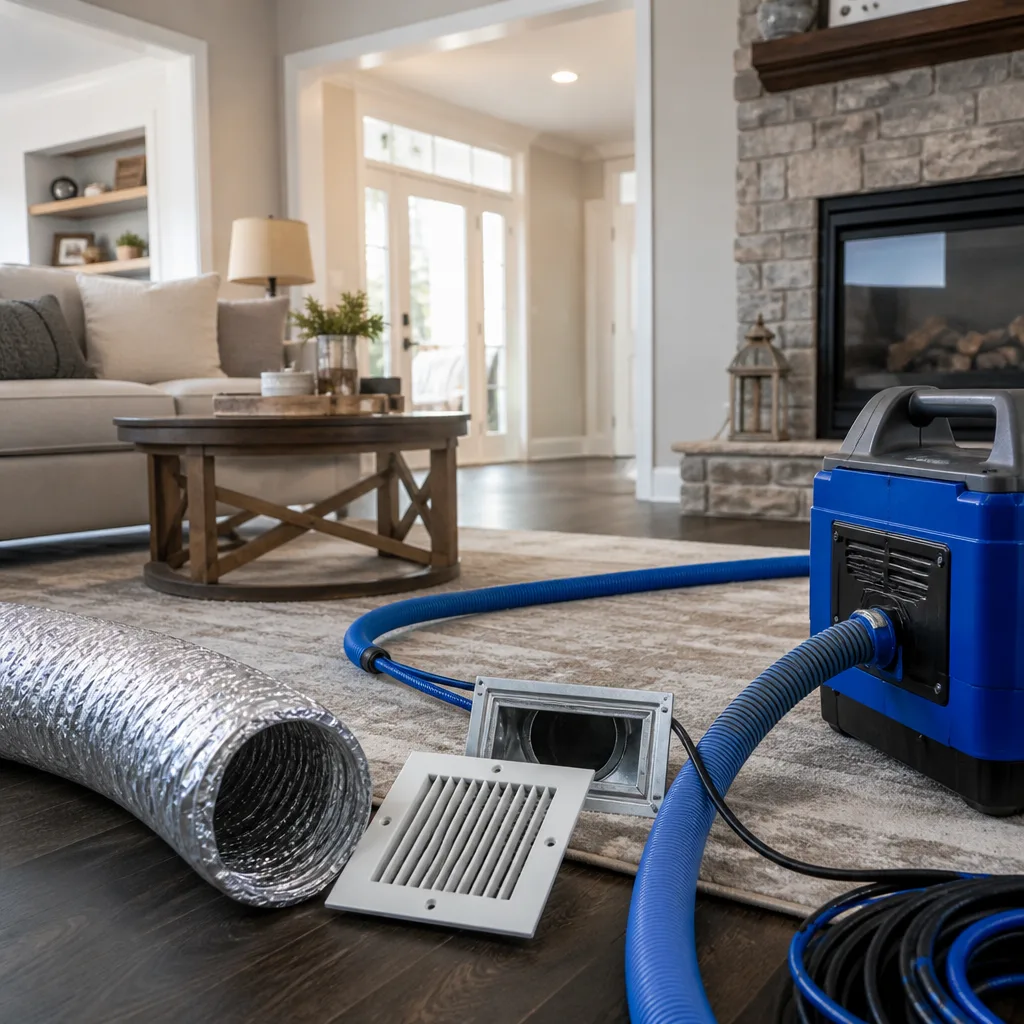 Whole-home duct cleaning
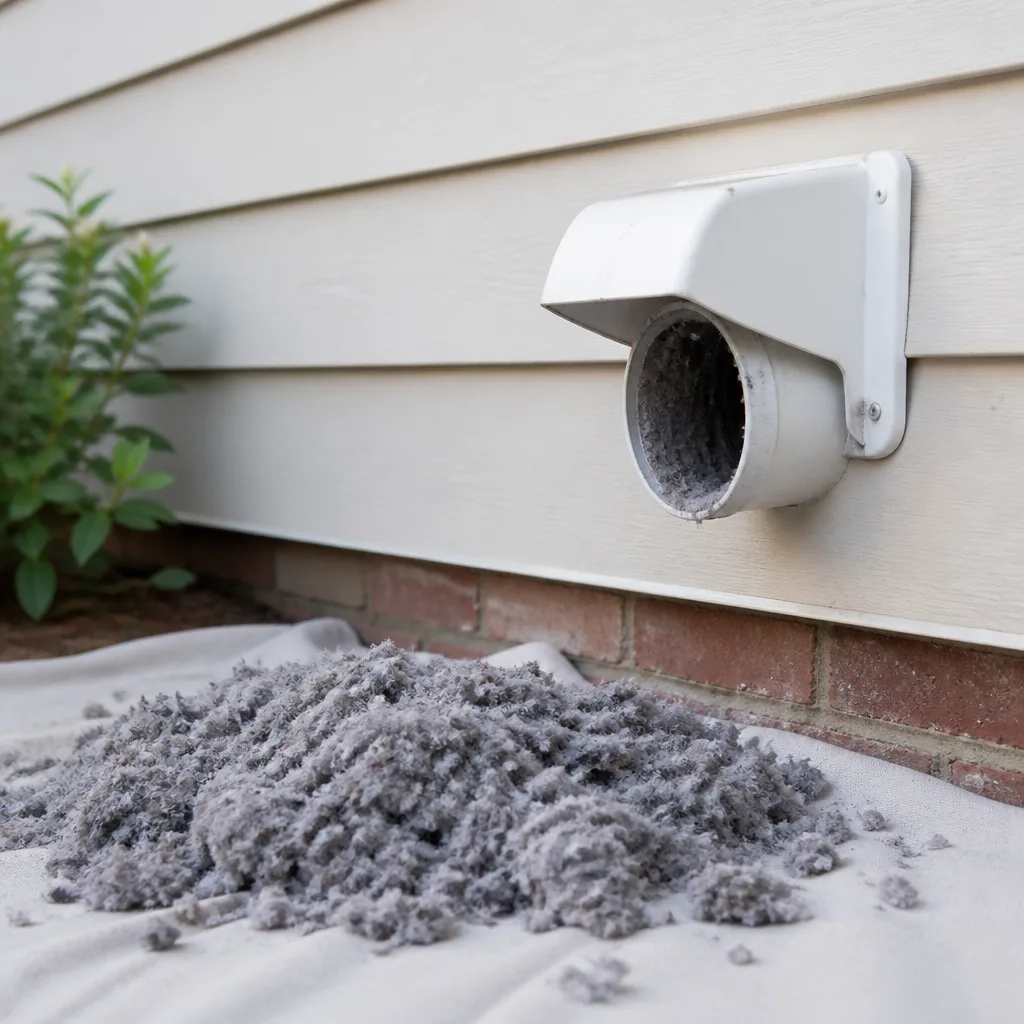 Dryer vent cleaning
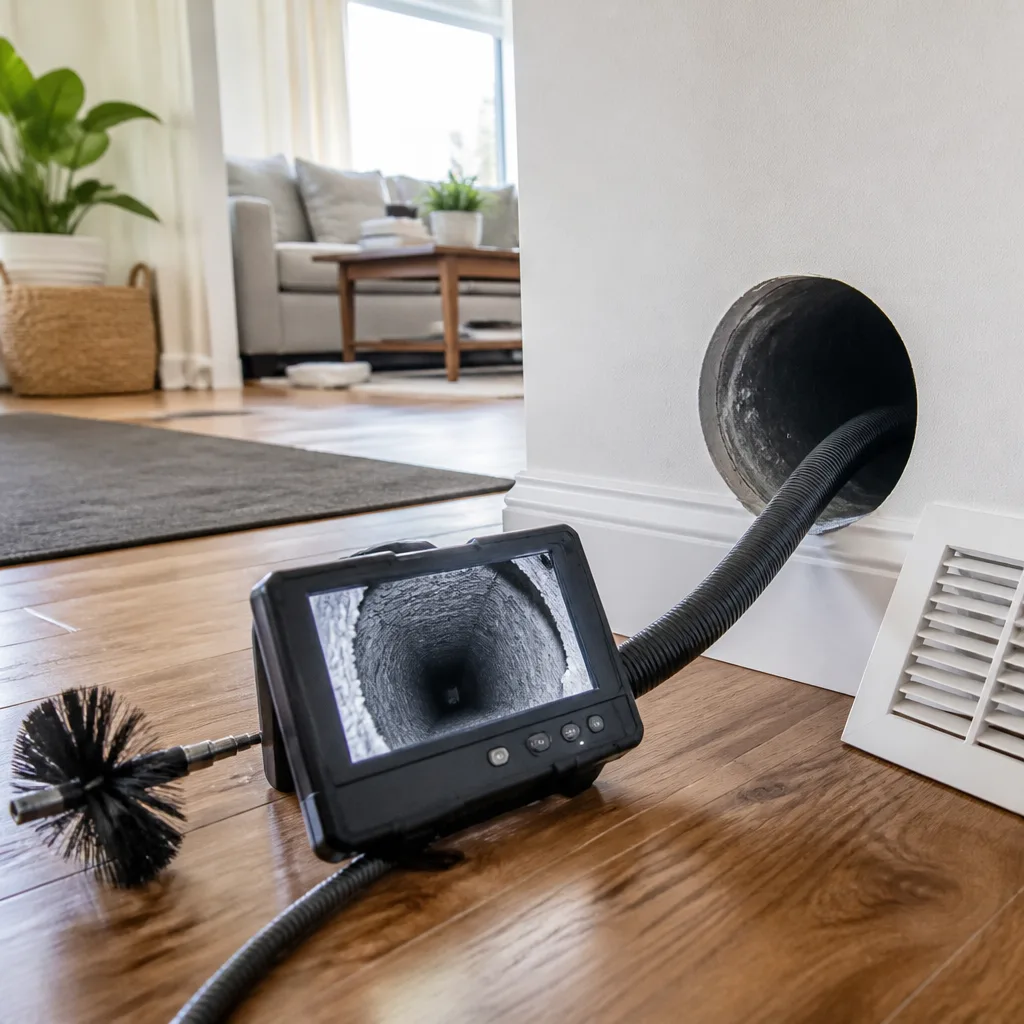 Camera inspection
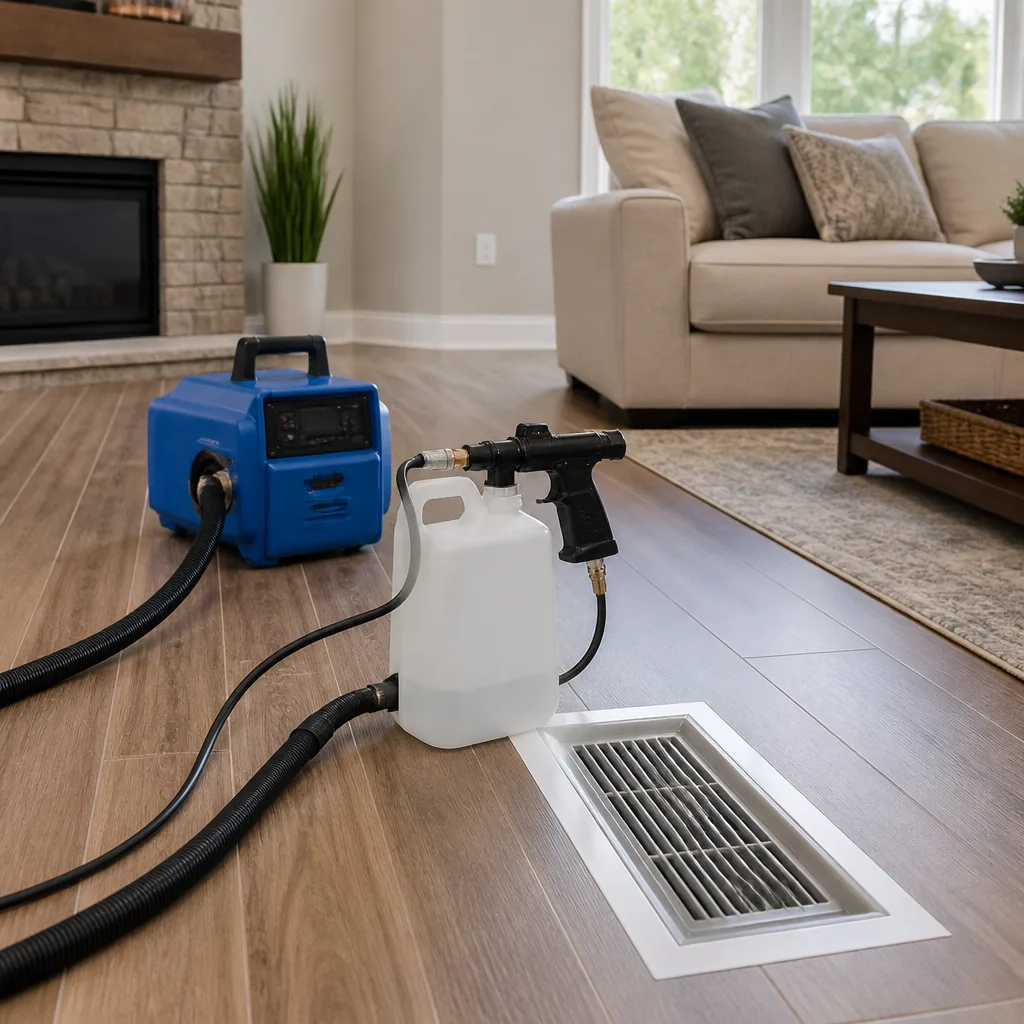 Sanitizing & deodorizing
Whole-system duct and dryer vent check with before-and-after photos - you see exactly what came out of your vents
That "$99 whole-house special" is a bait ad - the real number appears once they are in your hallway, or the "clean" is a shop-vac at the register. We photograph the inside of your ducts before and after instead.
Air Duct Cleaning Maintenance Checklist for Crown Heights Homeowners
Changing your filter every 90 days while ignoring your return plenum is like mopping the floor while a pipe keeps running. The checklist most homeowners follow treats symptoms, not sources. In Crown Heights, the sources are specific: street-level particulate from busy corridors, dust drifting out of a neighboring unit’s renovation, pollen that surges through spring, and the first blast of heated air each fall that pushes a season’s worth of settled debris into your rooms. This guide gives you a diagnostic calendar built around those triggers, plus plain-language guidance on MERV ratings, self-inspection, when to escalate to a professional, and how to document everything so a warranty claim or a service visit goes smoothly.
Quick Answer
A workable duct maintenance checklist in Crown Heights runs on four seasonal triggers – spring pollen, summer cooling load, fall renovation dust, and winter heating startup – with a filter check monthly, a register inspection each season, and a professional system evaluation when you notice odor, visible debris, or worsening allergy symptoms. Self-maintenance catches the early signals; a full evaluation with professional-grade equipment is what actually resets a contaminated system.
Styles & brands we work with
- Whole-home duct cleaning
- Dryer vent cleaning
- Camera inspection
- Sanitizing & deodorizing
Table of Contents
- Why Crown Heights Duct Maintenance Isn’t Generic HVAC Advice
- Your Month-by-Month Maintenance Calendar
- How to Self-Inspect Registers and Grilles Without Tools
- Choosing the Right Filter for Crown Heights Air
- When to Escalate From DIY to Professional Inspection
- How to Document Your Maintenance History
- Why Clean Ducts Are Only Half the Job
- Common Mistakes to Avoid
Why Crown Heights Duct Maintenance Isn’t Generic HVAC Advice
Crown Heights is a dense, mixed housing stock neighborhood. That single fact changes what your ductwork is up against. In a detached suburban house, the outside air reaching a return grille has crossed a lawn and a driveway. Here, it has crossed a block of four- and five-story walkups, a busy avenue, and possibly a scaffolding-covered facade where a neighboring unit is mid-renovation.
Three conditions do most of the work:
- Street-level particulate. Traffic corridors and commercial strips generate fine dust that settles on window ledges, fire escapes, and any intake path your system draws from. That material doesn’t stay on the sill. Air movement pulls it toward returns.
- Neighbor renovation dust. In attached and closely stacked buildings, demolition and patching in one unit migrates. Plaster dust, joint compound residue, and insulation fibers travel through shared cavities and open windows. Fall is heavy renovation season in Crown Heights, and that’s not a coincidence in your filter’s life.
- Older duct configurations. Many buildings in the neighborhood predate modern duct sealing practice. Sheet metal joints that were never sealed, or were sealed decades ago, leak into wall cavities and basements. A leaky return in a prewar building can pull air from a damp cellar rather than from the living space.
The practical takeaway: your maintenance rhythm has to track local conditions, not a generic “change the filter every three months” rule. The rest of this guide builds that rhythm.
Your Month-by-Month Maintenance Calendar
This calendar assumes a typical Crown Heights apartment or rowhouse with forced-air heating and cooling. Shift the timing if your building’s systems run on a different schedule, but keep the sequence. The order matters as much as the tasks.
- March – pre-pollen filter swap. Change the filter before the spring bloom, not during. You want a clean filter in place when pollen load peaks, so the filter is doing its job rather than already half-loaded. Walk the apartment and note any register that looks darker than the others.
- April through May – pollen season watch. Check the filter at the four-week mark rather than waiting the full interval. Windows open more, so more outdoor particulate enters. Listen at each return for a whistling sound that suggests a partially blocked grille.
- June – cooling startup. Before the first sustained heat, confirm every supply register delivers air, not just the easiest one. A register that’s weak in June is telling you something about a damper or a leak, and you want that information before the system is working hard.
- July through August – load season. Air conditioning runs longer, so the filter loads faster and condensate is present. Check for musty smell near the air handler or in the room closest to it. That smell is a signal, not a nuisance.
- September through October – renovation season prep. If any unit in your building is under construction, or if you’re planning work yourself, seal the returns nearest the work zone with plastic film and tape for the duration. Change the filter the day the work ends, not a week later.
- November – heating startup. The first few days of heat push settled dust off duct surfaces and into the rooms. Expect a visible dust bloom and don’t panic. What matters is whether it settles after a few days or keeps coming back.
- December through February – closed-window season. With windows shut, indoor particulate has nowhere to go but through the filter. This is the stretch where a marginal filter shows its limits. If you have pets, shorten the filter interval through this period.
One extra note for Crown Heights specifically: the spring and fall transitions here swing hard, and heating and cooling systems often cycle between modes within the same week. That cycling pushes air both ways through the same ducts and stirs up debris that a single-season climate would leave settled.
How to Self-Inspect Registers and Grilles Without Tools
You don’t need a camera or a meter to catch the early signals. You need your eyes, your nose, and a flashlight you already own.
Start at the return grille. A return pulls air in, so it collects first. Look at the face of the grille under an angled light. A thin, even gray film is normal between cleanings. Darker, patchy buildup concentrated on one side suggests uneven airflow, which points to a restriction downstream. Then wipe the inside of the grille frame with a white paper towel. What color comes off?
- Light gray – normal accumulation, keep to the calendar.
- Dark gray or black – heavier load than expected for the interval since your last cleaning.
- Yellowish or brownish smudge – possibly a moisture signal, worth a closer look.
- Gritty feel – construction or street particulate, not ordinary house dust.
Next, look into the supply registers. Hold the flashlight at an angle to the duct wall just inside the boot. You’re looking for two things: a uniform matte surface (fine), or fuzzy, patchy growth and debris webs (a signal). Then the nose test. Turn the system on and stand at each supply for thirty seconds. Musty, sour, or chemically smells that appear only when air is moving are the most reliable early warning a duct system gives you.
Finally, count. Note which registers have airflow and which don’t. A register that’s cold in cooling season when it should be cold, or weak when it should be strong, is a diagnostic clue. Write it down. You’ll want the record later.
If what you find is a damp, musty smell with visible surface growth inside a register boot, don’t keep wiping it. That’s a threshold signal, covered further down.
Choosing the Right Filter for Crown Heights Air
MERV ratings get explained badly. Here’s the practical version.
MERV measures the fraction of particles at a stated size range that a filter captures. Higher MERV means finer capture. But higher MERV also means more airflow resistance, and a filter that’s too restrictive for your system is worse than a modest one that fits. The wrong filter can starve airflow, raise energy use, and in some cases freeze a coil in summer. So the aim isn’t the highest number on the shelf. It’s the highest MERV your system’s blower can carry without complaining.
A working starting point:
- MERV 8 – a baseline that handles pollen, mold spores, and most street-level particulate. If your system’s airflow is already marginal, start here.
- MERV 11 – a reasonable step up for households with pets, allergy sufferers, or an active renovation nearby. Most residential systems tolerate this without a hitch, but check airflow after the swap.
- MERV 13 – fine-particle capture, useful if there’s a respiratory concern in the household. It’s restrictive. Don’t go higher without confirming your blower can carry it.
Now the part that’s specific to Crown Heights. Fine street particulate is the dominant load here, and that means a filter with a low-pressure-drop design at the target MERV rating will outperform a cheaper high-resistance one. Also: thin filters in small return grilles load faster in this environment than the same rating in a wide filter grille. If your apartment has the narrow filter slot common to older buildings, expect to change it more often, not less. Consider upgrading the return to hold a deeper filter if the system allows it, and if you want a step beyond swap-and-forget, a media cabinet from a name like Aprilaire or a Honeywell filter setup gives you a larger filter surface and a slower loading curve.
One check after every filter change: turn the system on and stand near a supply register. Airflow should feel the same as before the change. If it’s noticeably weaker, the filter is too restrictive.
When to Escalate From DIY to Professional Inspection
Every DIY maintenance routine has a stopping point. Here’s where the line is.
Escalate to a professional inspection when any of these are true:
- Persistent odor. A musty or sour smell that returns within a week of your cleaning efforts is a signal that the source is deeper than a grille face. Odor that appears only when the system runs is the clearest indicator.
- Visible growth or heavy debris. If a flashlight reveals fuzzy growth, matted debris, or flaking material past the boot, that’s a system-level concern. Surface wiping can’t fix it.
- Allergy or respiratory flare-ups that track with the system. If symptoms worsen when the heat or cooling runs, and improve when it’s off, that pattern points to the air path.
- Post-renovation. Any significant renovation in your unit or an adjacent one means a professional evaluation, not just a filter change. Construction dust reaches places a filter can’t protect.
- Dust settling faster than it should. If you’re dusting weekly in a sealed apartment, work backward to the duct system.
- A leak, a cold spot, or a disconnected run. Visible gaps at joints, a register that never delivers air, or loose duct sealing all mean the system needs repair, not just cleaning.
At that point, the right service is a full system evaluation. For Crown Heights homes, this is also the moment to consider air duct cleaning done properly, with containment-level equipment rather than surface vacuuming. Reach out and get a written scope and price before any work starts.
How to Document Your Maintenance History
Documentation seems tedious until you need it. Two situations make it worth the small effort: a warranty claim on your HVAC equipment, and a service visit where you’re trying to explain what you’ve been noticing. Here’s a simple system.
Keep a single sheet (paper or a note on your phone) with three columns: date, action, and observation. Every filter change, every register inspection, every service call goes on the list with a one-line note. “Nov 4 – changed filter, 20x25x4, MERV 11. Right return dusty, noted.” That’s enough.
Add a photograph habit. Snap a picture of each filter the day you install it and the day you remove it, and note the number of days between them. That visual record is more useful than any recollection. It tells you how fast this specific Crown Heights apartment loads a filter, and it lets you adjust the calendar based on real data instead of a generic rule.
For professional visits, keep the invoice and the written estimate. Note the scope: what was cleaned, what was repaired or sealed, what was recommended for next time. When you’re evaluating a warranty claim, a record of consistent maintenance is what supports your position. When you’re preparing for a service visit, your history saves time and helps the technician diagnose accurately.
Keep the record for at least the life of your HVAC equipment. It’s a small habit that pays off in exactly the moments you need it most.
Why Clean Ducts Are Only Half the Job
Cleaning a duct system that leaks is like sealing a jar and then punching a hole in the lid. You’ve done real work, but you’ve left the mechanism undone. Duct leakage is common in Crown Heights’s older buildings, and it matters for three reasons.
First, it undoes the cleaning. Air moving through a leaking return picks up dust and fibers from wall cavities, basements, and unconditioned spaces, and delivers them straight back into the living space. Second, it shifts your energy bill. Conditioned air lost into a cavity is air you paid to cool or heat but never felt. Third, a leaking return can pull in air from a damp cellar or a crawlspace, and that air is where musty smells originate.
That’s why a proper system evaluation usually finds more than just dirty ducts. It finds gaps at joints, disconnected runs, unsealed boot penetrations, and poorly fitted return connections. Professional duct repair and sealing on the same visit saves the second appointment and the coordination that goes with it, and it means the hardware you’re paying to clean stays clean longer.
The same logic applies to filtration and sanitizing. A system that’s been cleaned and sealed is a system you can then improve with proper filtration. That’s why we work with components from Honeywell and Aprilaire on the air quality side, and it’s why our scope covers the whole indoor air environment in one coordinated visit rather than an isolated duct cleaning.
Professional-grade equipment matters here, and it’s worth knowing what that means. Our technicians have up to 8 years of experience, and the equipment we bring is built for the job, not borrowed from a hardware store. Rotobrush rotary brush systems handle the inside surfaces of the ductwork. Nikro HEPA-rated vacuums capture what’s dislodged, so it’s removed rather than redistributed into your rooms. For heavily contaminated systems, Abatement Technologies filtration and containment equipment lets us clean with negative-air control. This is what separates a real cleaning from a cosmetic one.
See the difference
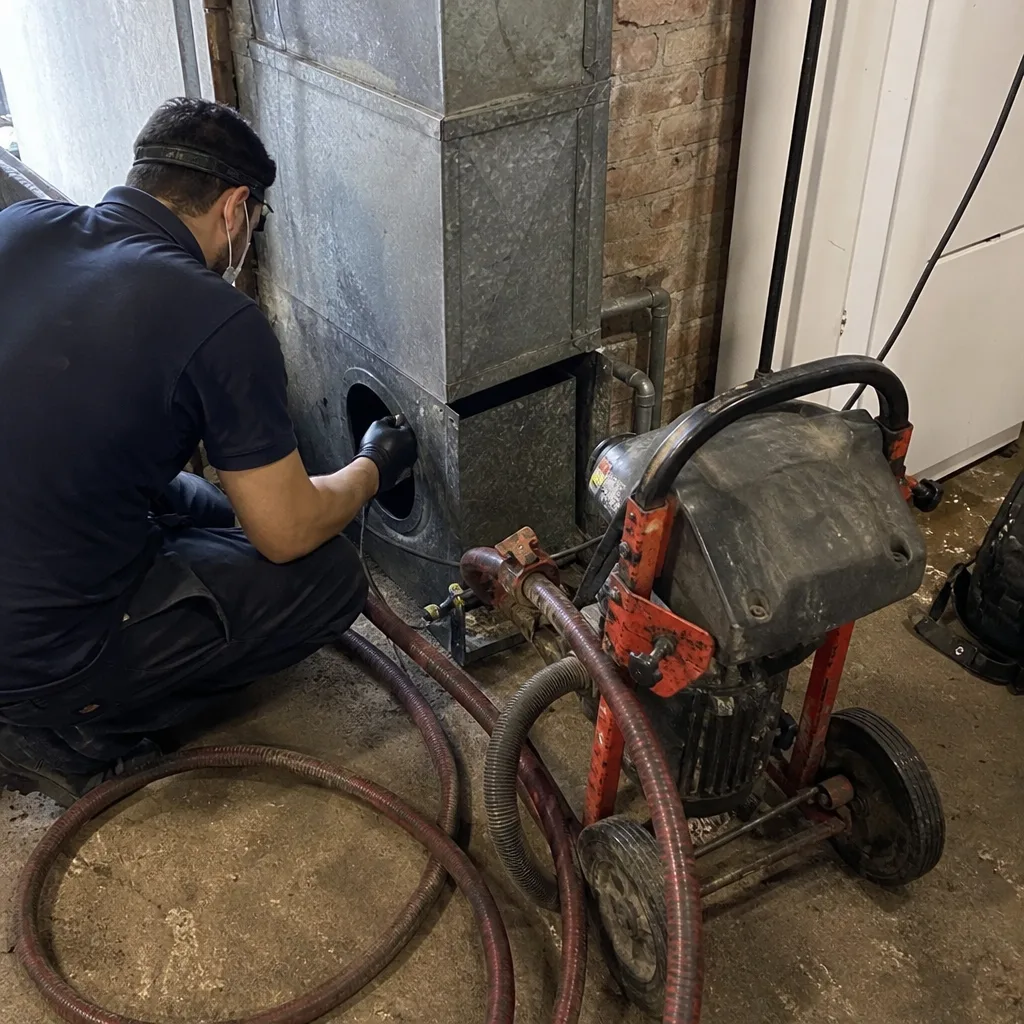 Before
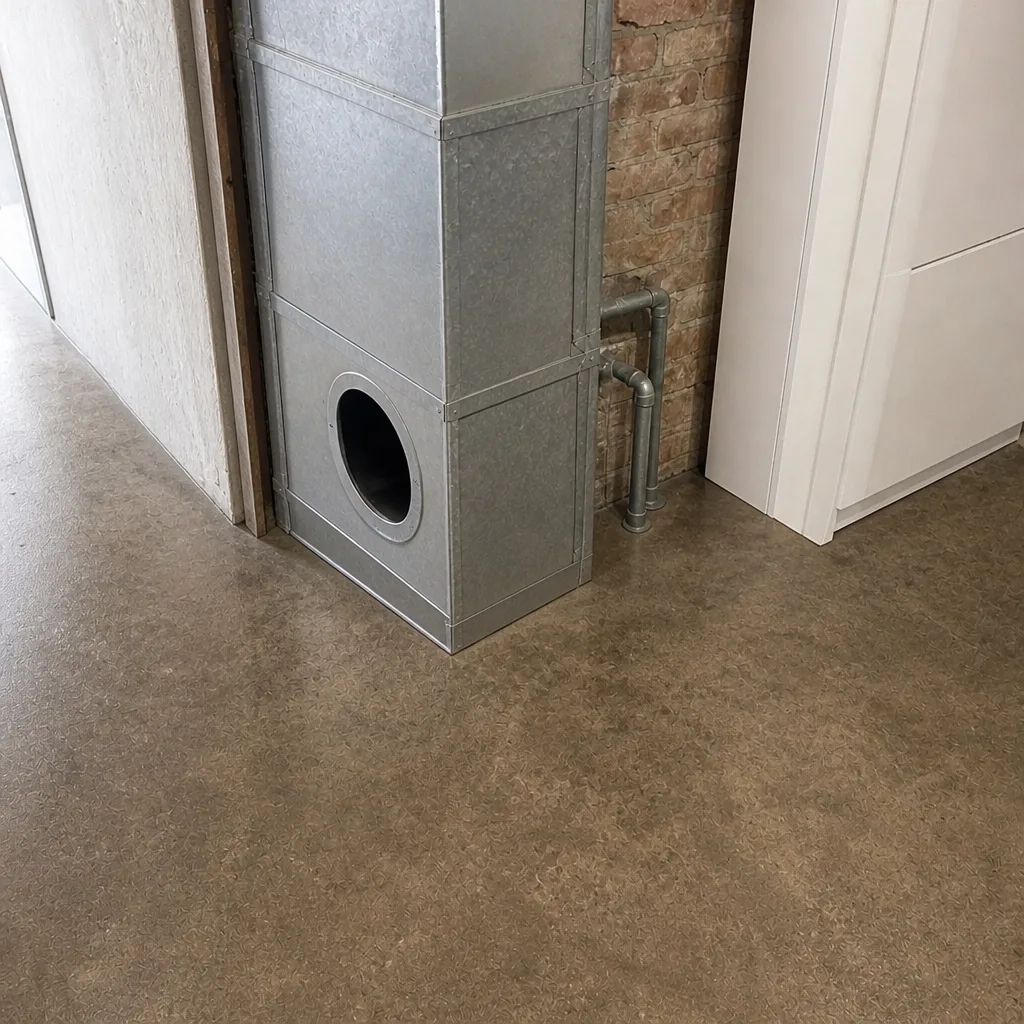 After
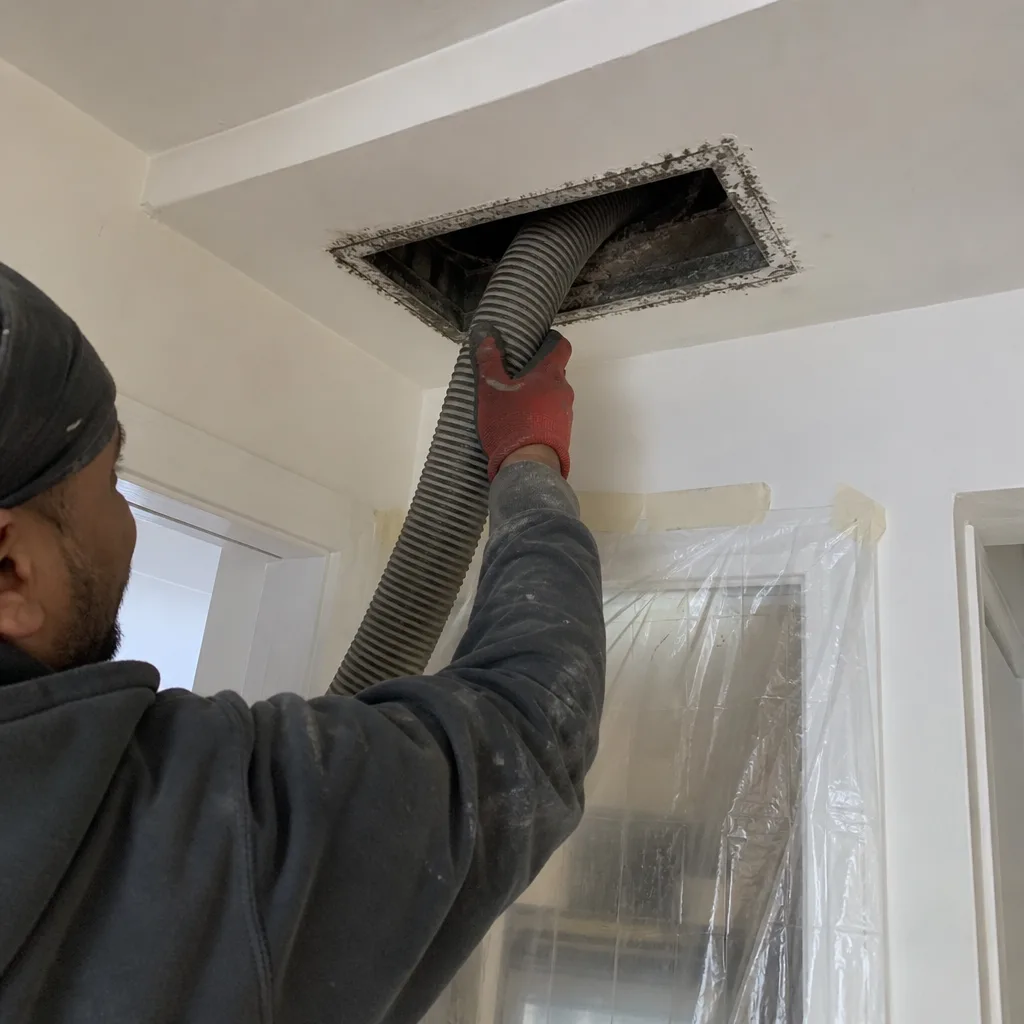 Before
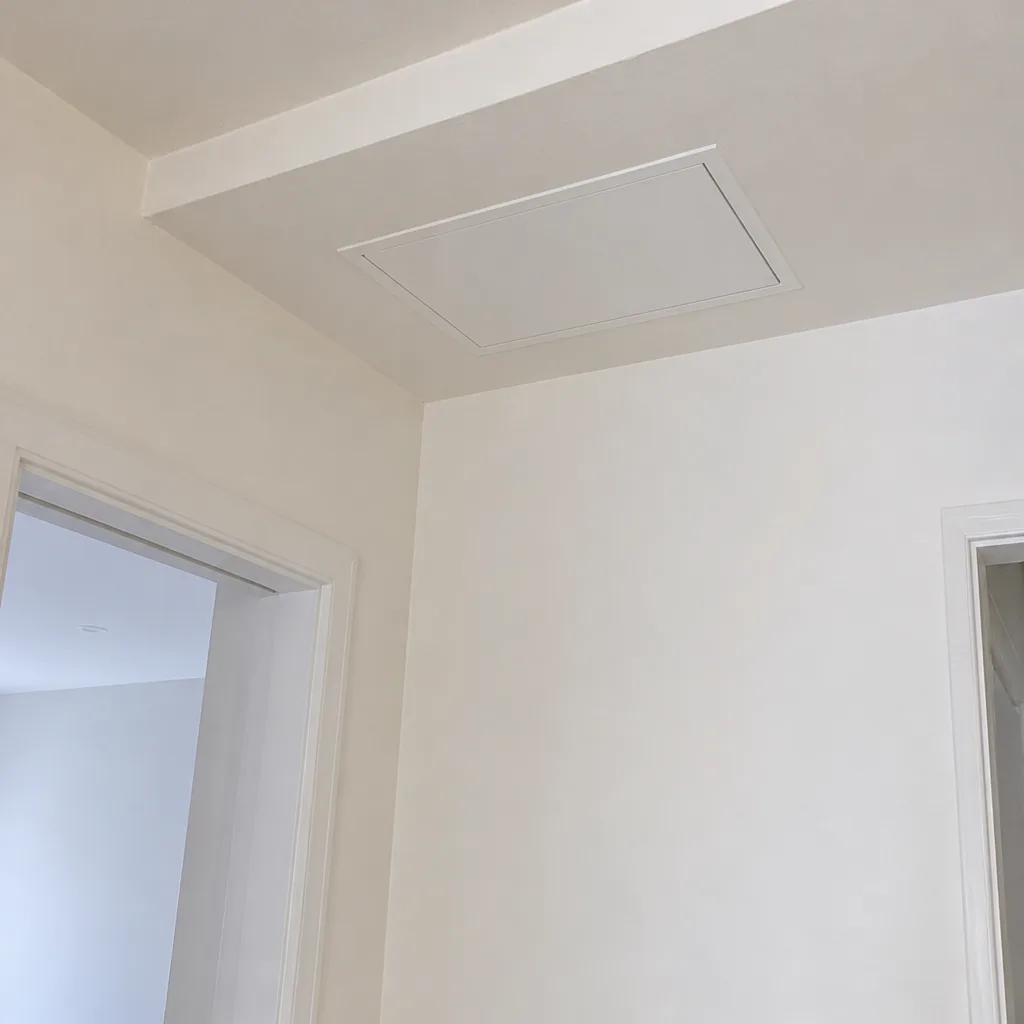 After
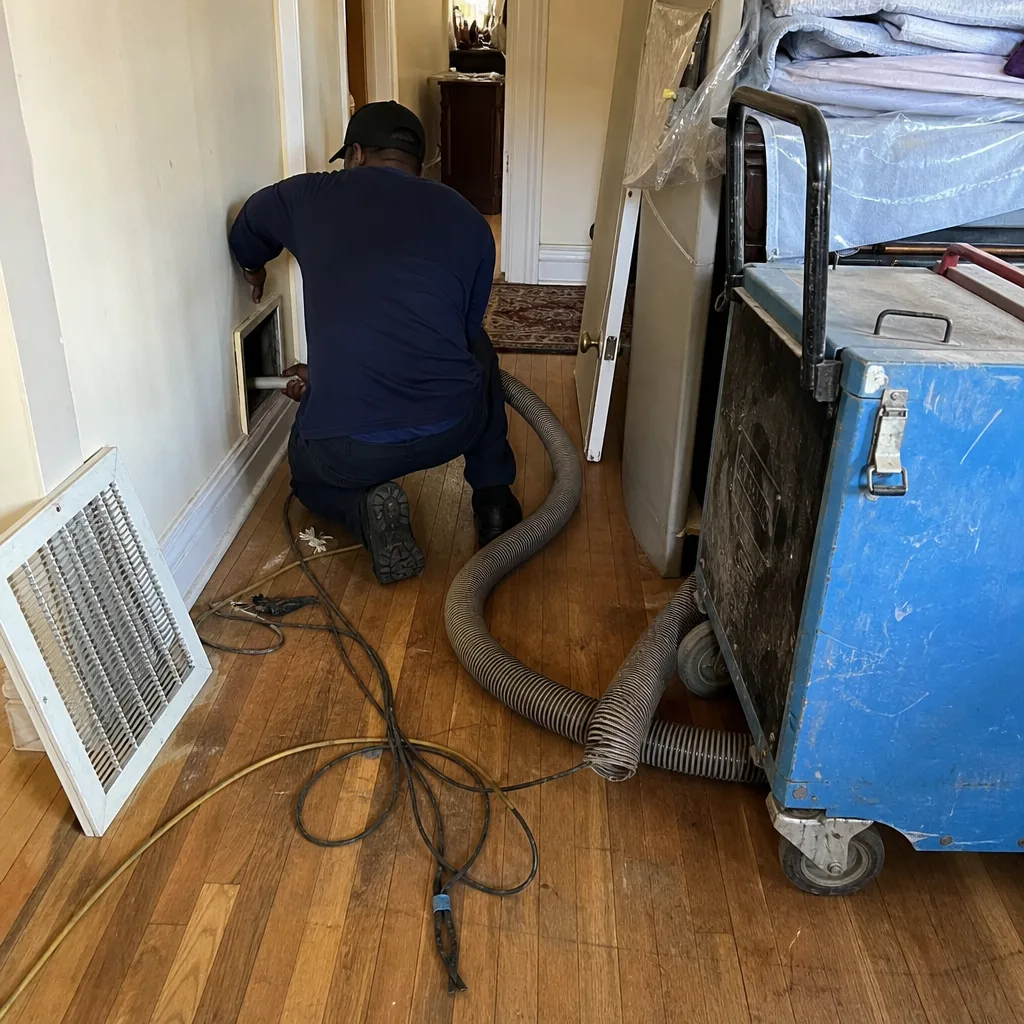 Before
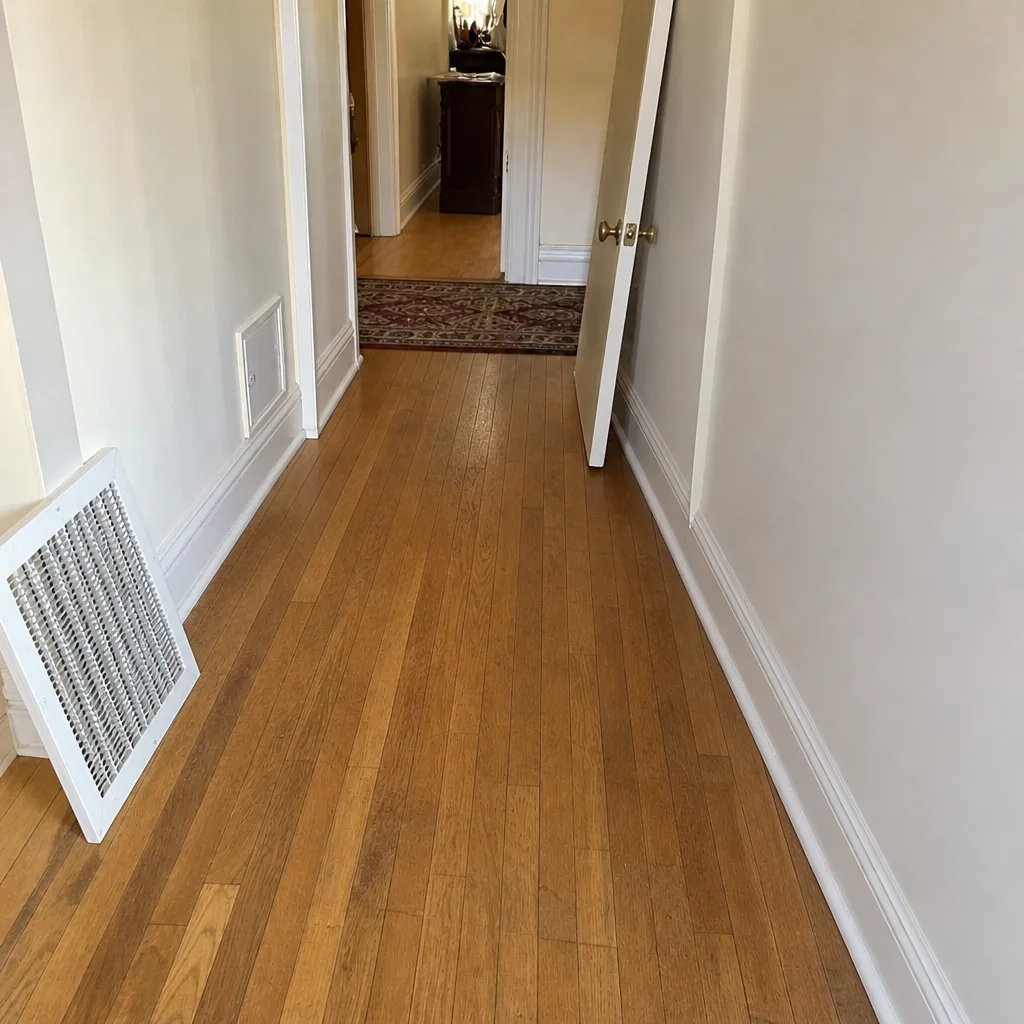 After
Common Mistakes to Avoid
- Fixing the filter and stopping there. A new filter is a good first step, but it doesn’t touch the return plenum, the coil, or the joints. The source of what you’re seeing may be past all of those.
- Choosing the highest MERV rating on the shelf. A MERV 13 in a system built for MERV 8 starves airflow, and the consequences show up on your energy bill and in a coil that can’t breathe. Match the filter to the system, not to the marketing label.
- Cleaning ducts without checking the seams. A cleaning performed on leaky ductwork is a temporary reset at best. If the joints aren’t sealed, the dust returns, and the money you spent goes back to where it came from.
- Skipping the filter change after a renovation. Renovation dust travels far past the work zone. In Crown Heights, where a neighboring unit’s work can reach your returns, change the filter on the day the dust settles and inspect a week later.
- Waiting for visible dust on the floor. By the time dust is settling in living space, the system has been loading for a while. Registers and the nose at a supply are earlier signals.
- Not documenting anything. When a warranty question comes up and you have no maintenance record, you’re relying on memory against a claims process. A one-line log closes that gap.
- Assuming a consumer shop-vac can do the job. Consumer vacuums don’t have the reach, the containment, or the rated capture for a duct system. They can stir up debris as much as remove it.
When to Call a Professional
Call a professional when the signal is system-level: persistent musty or sour odor when air moves, visible growth or heavy debris past a register boot, a filter that loads faster than it should in a sealed apartment, dust settling weekly, or a home with allergy or respiratory concerns that track with the heating and cooling cycles. Post-renovation is another clear threshold – especially in Crown Heights, where an adjacent unit’s construction can introduce dust through shared building cavities. Leaks, disconnected runs, and registers that never deliver air need repair, and that’s a job for a professional evaluation. Air Duct Cleaning Crown Heights offers free estimates in Crown Heights – call (833) 754-9186. Our technicians have up to 8 years of experience, and the written estimate sets the final price per job.
Frequently Asked Questions
Most Crown Heights homes fall into a three-to-five year window for a full professional evaluation, but the specific wear-and-tear in your building matters. Dense urban particulate, active renovation in the building, pets, or recent construction all shorten the interval. A useful rule: if two seasons pass and you’re still seeing the signals you saw before, it’s time to evaluate.
Yes. Fine street particulate loads a filter faster than the suburban equivalent, and Crown Heights’s dense housing stock means more of it reaches your returns. If your filter slot is the narrow kind common to older buildings, you’ll change it more often than a homeowner with a deep media cabinet. Let the filter’s visible load guide you past the calendar.
No. Higher MERV means finer capture but more airflow resistance. A filter too restrictive for your blower can starve airflow and raise energy use. MERV 8 to MERV 11 is a practical starting range for most Crown Heights homes. Check airflow at a supply register after each change, and step down if it feels weak.
The professional scope includes rotary brushing of the duct surfaces with a Rotobrush system, HEPA-rated capture with a Nikro vacuum, and containment-level control with Abatement Technologies equipment for heavily contaminated systems. What you do yourself is the filter, the register check, and the frequency of cleaning. The duct interior and the system’s joints need the right equipment.
Ask for the scope in writing before work starts, and ask for before-and-after photographs of your own system. A written estimate that names what will be cleaned and what will be repaired or sealed, plus photos at the end, is the standard we hold to. If a quote doesn’t specify the equipment or the scope, ask before you book. Call (833) 754-9186 for an estimate.
Yes. Seal the returns nearest the shared wall with plastic film for the duration of the work, change the filter the day the work ends, and inspect one week later. If dust persists or you notice a musty smell, that’s a sign the renovation dust reached the system beyond what the filter could handle. A professional evaluation is the next step.
That’s a repair job, not just a cleaning job. Loose joints, disconnected runs, and unsealed boots mean the system is drawing air from cavities and losing conditioned air before it reaches your rooms. The right approach is to clean and seal on the same visit rather than coordinate a second contractor afterward. Ask for the repair scope to be included in the written estimate.
Dryer vent cleaning follows a different rhythm than duct cleaning and is a leading cause of residential fires, so it’s often the task that duct-only companies skip. If the vent hasn’t been checked in a year or more, or if lint is visible around the exterior termination, add it to the checklist. To schedule that alongside a duct evaluation, see our dryer vent cleaning page.
The Bottom Line
A maintenance checklist for Crown Heights should be built around the local triggers, not a generic interval. Spring pollen, summer cooling load, fall renovation dust, and winter heating startup set the rhythm. Filter checks monthly, register inspections each season, and a professional evaluation when odor, visible debris, or symptoms persist will keep the system honest. Pair the cleaning with repair and sealing, because clean ducts on a leaky system don’t stay clean. And document everything, because the record is what lets you validate warranty claims and prepare for service. That’s what a checklist should actually do.
If your system needs a real evaluation, or if you’re ready to arrange a professional cleaning that includes repair and sealing on the same visit, call Air Duct Cleaning Crown Heights at (833) 754-9186. We answer 24/7, and fast dispatch runs from 7am to 7pm, Sunday through Friday. Estimates are free, and the written estimate sets the price per job. When your checklist points to a full system evaluation, HVAC cleaning as part of the same visit keeps it to one appointment instead of several.
Written by the team at Air Duct Cleaning Crown Heights.